

























































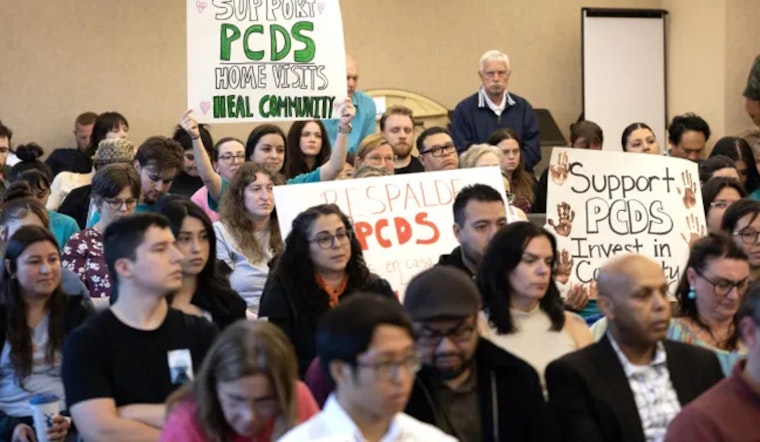
As Multnomah County faces its greatest budgetary shortfall in over a decade, the Board of Commissioners held a weighty second public hearing on the Fiscal Year 2025-26 budget. Drawing a crowd large enough to spill into overflow areas at the Multnomah County East building, concerned community members arrived in droves - some 80 people provided in-person testimony while another 154 submitted their thoughts and pleas in writing.
The root of the financial dilemma traces back to less revenue than expected from the Metro's Supportive Housing Services Measure and property taxes, alongside federal funding's unpredictable future. That's a fiscal speed bump that translates to painful constraints for next year's $4 billion budget proposal by Chair Jessica Vega Pederson. At the hearing, she acknowledged the public's presence, stating, "Thanks to everyone for taking time out of your life to be here and join us. We are looking forward to hearing your thoughts," Multnomah County News reported.
Community priorities are evident in the diverse range of services advocated for - from legal aid to employment programs, and from eviction prevention to youth and family services. Notably, groups like the Somali American Council of Oregon and the Latino Network highlighted their critical efforts. Khalid Ali, a representative from SACOO, illustrated the impact of their programs with a success story: "Today, at 19, he is a young responsible man, finishing his first year at Portland State University studying business," when recounting a young person's life turned around thanks to their intervention.
Latin Network's Elina Bedoya spoke up for the Successful Families program which is facing budget cuts saying, "These are life changing services that shape the futures of our children." Also on the chopping block is funding for Multnomah County Animal Services, prompting foster parent volunteer Roxanne Nygard to argue for the maintenance of critical after-hours services, "It breaks my heart that without this vital service, that puppy would have suffered. I urge you to maintain after hours and emergency support," Multnomah County News reported.
On the legal front, nearly a dozen public defense representatives made a case for the continuation of crucial services that help prevent homelessness or aid those working their way back into housing. Metro Public Defender case manager Cierra Carlson shared a client's experience stating, "This is the first time in years that I have been off the streets and have my own place to live. I hope you will see the significant impact this program has had on my life."
The poignant historical matter still seeking closure is the past harm to the Chinese community at Lone Fir Cemetery. Community advocate Jenell Theobald urged for a formal apology and proper funding for a memorial, an act of reconciliation decades overdue. On other contentious fronts, the proposal for the East County Homelessness Resource Center drew mixed feedback from local officials who stressed uneven needs across communities and a desire for greater engagement from the County in planning.
The county board chair remains open to public input, encouraging community members to continue submitting written testimony online in multiple languages via the county's website or to email the board clerk. With a virtual hearing scheduled for May 28 and a final vote looming on June 12, the window for community influence narrows as Multnomah County grapples with its fiscal squeeze.





