

























































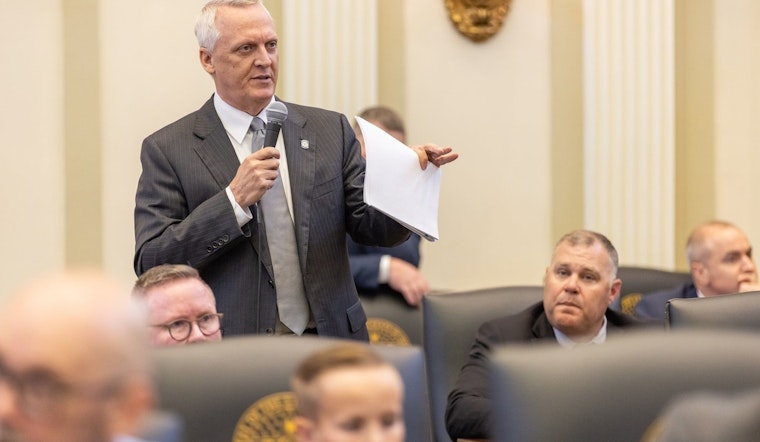
Oklahoma's Legislature has wrapped up its 2025 session with a significant overhaul of the state's administrative rules process, an effort driven by a bipartisan commitment to enhance legislative oversight and accountability. At the heart of the matter, six joint resolutions that served to disapprove proposed rules from various state agencies were passed, capped by a suite of reform bills that proponents say will significantly modernize how state agencies create their regulations. In total, over 5,600 pages of administrative rules were scrutinized, as reported by the Oklahoma House of Representatives.
"When we allow rules that lack proper statutory grounding, we are complicit in the erosion of that authority and willingly hand over the reins of lawmaking to unelected administrators," House Administrative Rules Chair Rep. Gerrid Kendrix, aptly stated in his assessment of the session's outcomes, according to a statement from the Oklahoma House. Highlighting the constitutional responsibility of the legislature, the recent actions are seen as a move to tightly rein in the expansiveness of administrative powers and to ensure agency regulations are firmly anchored in the law.
Key among the reforms is House Bill 2728, establishing the Regulations from the Executive in Need of Scrutiny (REINS) Act of 2025, which introduces new statutory requirements for agencies when adopting significant administrative rules, including fiscal impact analyses by the Legislative Office of Fiscal Transparency (LOFT). House Bill 2729 ends the long-standing Chevron deference, compelling state courts to interpret statutes and regulations independently. Senate Bill 1024 adds another layer of oversight, prohibiting rule adoption without executive approval. Finally, Senate Bill 995, still awaiting the governor's signature, will make legislative approval mandatory for all agency rules, as explained in the Oklahoma House’s recent report.
The passage of these pieces of legislation represents a considerable shift in the dynamic between Oklahoma's elected bodies and its agencies. "With these reforms in statute, Oklahomans will see a more transparent, accountable, and responsive administrative rules process that will better serve our state," Sen. Micheal Bergstrom told the Oklahoma House. The measures aim to forge a government that is not only answerable to the law but ultimately to the people it serves.
The final push for the resolutions saw unanimous votes in the House, with resolutions disapproving rules from the State Department of Education, the Oklahoma Department of Securities and the Medical Marijuana Authority, among others. The session's closing signaled an effort to not only tighten existing procedures but also, according to House Speaker Kyle Hilbert, to restore legislative oversight and reinforce the separation of powers in Oklahoma.





