

























































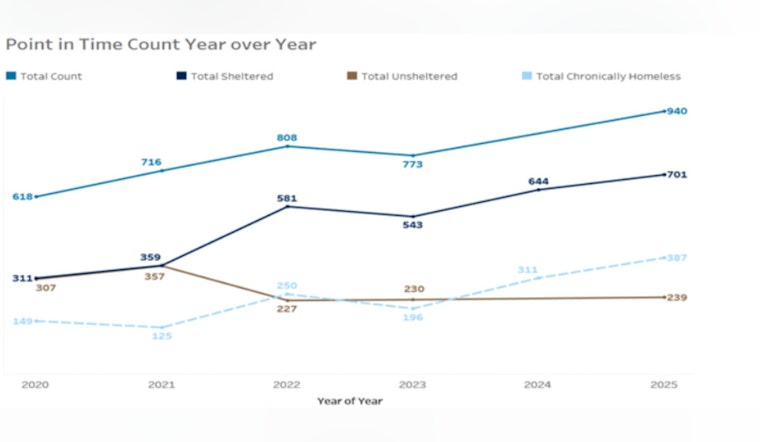
The latest Homeless Count in Washington County paints a picture of progress amidst persistent challenges. Preliminary data from the 2025 Point in Time (PIT) Count, which is carried out every two years, identified 940 individuals without a roof over their heads, a figure that includes 701 currently taking refuge in emergency shelters. This increase in the counted sheltered population reflects the county's addition of more than 350 year-round shelter units since 2020, as reported by Washington County's official website.
The implementation of expanded homeless street outreach efforts and revised PIT count methodology appears to have begun to more accurately capture the extent of this societal issue. "The partnership with service providers and city jurisdictions is crucial to completing the PIT here in Washington County," Molly Rogers, executive director of Washington County Department of Housing Services, told the publication. Efforts to align regional approaches and utilize consistent survey questions across Washington County, Clackamas, and Multnomah counties, have been led by Homeless Research and Action Collaborative at Portland State University, which coordinates the street count and oversees data processing.
In the same breath, it's impossible to not glance toward the 70% of those once chronically homeless in 2024, who have since found housing due to the direct efforts of the county's housing programs. Yet, the broader economic landscape, marked by rising unemployment, increasing living costs, and spiraling utility expenses, fuels fresh waves of individuals facing homelessness for the first time—a stark 69% increase since 2020. Kemp Shuey, executive director of Community Action, shared insight into the growing demand, saying, "People who are living paycheck to paycheck call us every day looking for resources to avoid homelessness and, unfortunately, more people come to us asking for help than we can serve," a statement obtained by Washington County's official website.
Furthermore, the PIT count is not without limitations; it tends to underrepresent those doubled up or couch surfing. It is suggested that communities of color are less visible in the count, an issue that local culturally specific providers have brought to attention. To more fully grasp the scope of the need for homeless services, Washington County is considering the use of a "by-name list"—a data collection process spanning the year and capturing the ongoing struggle of individuals as they attempt to seek stable housing. This approach, which would offer a running tally of those in need of support throughout the county, is discussed to likely show higher numbers but promises a more precise picture crucial for targeted investments.
Despite the strides made, including the successful housing of many through measures funded by the voter-approved Supportive Housing Services, the accelerating economic pressures continue to challenge the region's capacity to cope. Washington County, which last year served over 10,000 individuals and currently supports nearly 4,000 with dedicated rental assistance, stands as a testament to the community's effort but also as a reminder of the ever-growing gulf between the escalating need and the available resources to secure housing stability for its people.





