

























































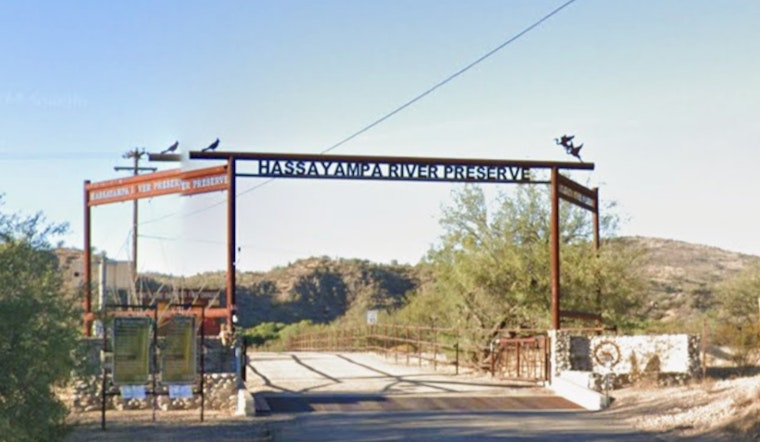
Arizona State University's research initiative is plucking truths from the desert, where the Hassayampa River Preserve, a sanctum of biodiversity merely 60 miles from Phoenix, is silently bracing against invasions of pollution and industry. According to a report from ABC15, led by Assistant Professor Liza Roger from ASU's School of Molecular Sciences, the study is coupling data like water quality and soil health with the potential contaminants introduced by proximal threats—namely mining operations, increasing traffic, and the foreboding wildfire.
The team, consisting of diligent students, has made the desert's heart their classroom, as part of a new iteration of learning, where textbooks breathe and hypotheses are quenched by the river itself. In a statement obtained by KJZZ, Roger explains her motive, “So I get them to consider the preserve and the parameters, the conditions of the preserve and try to design a project that they can undertake in one semester there to monitor and check the health of the environment from a chemistry standpoint since they are doing environmental chemistry." The experiments are far from hypothetical, manifesting as student-driven projects that brave the challenge of one semester.
This active approach is a response to a stark lack of environmental data, which leaves the preserve's narrative incomplete. Roger aims to remedy this by constructing, semester by semester, a growing database made of the environmental puzzles the students labor to solve—taking their fresh expertise from notebooks to nature, and into the river where they sample, scrutinizing the health of the preserve.
Student engagement speaks volumes, their projects ranging with careful precision, from collecting river water samples to tracing the origins of heavy metals, possibly left behind by wildfires, now ingrained in the soil. Liza Roger told KJZZ, “So year after year, we're hoping to build a database of different parameters at the preserve. As the students design their own project and measure these things, because there's very, actually very little environmental data on the preserve.”




