

























































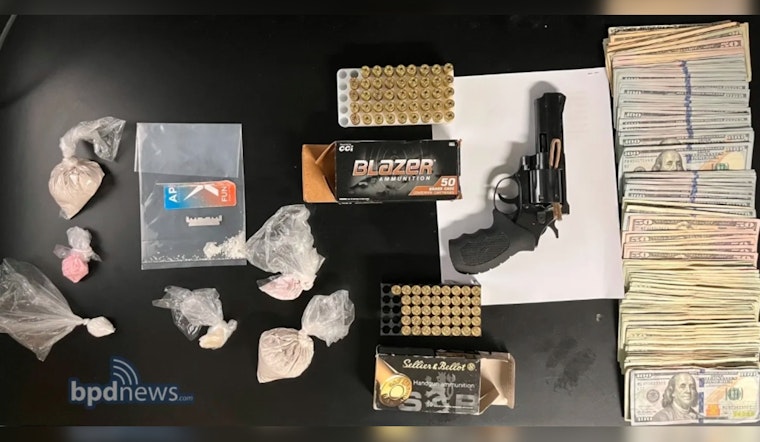
A 32-year-old Randolph man has been arrested following a comprehensive fentanyl trafficking investigation that uncovered over 115 grams of the deadly synthetic opioid, firearms, and drug trafficking paraphernalia in a Dorchester storage unit. The arrest represents the latest development in Massachusetts' ongoing battle against what experts describe as the deadliest drug crisis in the state's history.
Details of the Investigation
Rafael Mercedes of Randolph was taken into custody on Thursday, June 12, 2025, following a lengthy investigation conducted by the Boston Police Drug Control Unit, Norfolk County Police Anti-Crime Task Force, and the Drug Enforcement Administration. According to Boston Police, investigators executed search warrants at a storage facility located at 121 Homestead Street in Dorchester, which had been linked to Mercedes through their ongoing investigation.
The search yielded a significant cache of illegal narcotics and weapons. Investigators discovered multiple plastic bags containing tan, pink, and white powdered substances, as well as white rock substances located throughout the storage unit. Boston Police report the total weight of seized fentanyl reached approximately 115.5 grams. Additional evidence included a black .357 Magnum revolver recovered from a blue suitcase, 44 rounds of .38 Special ammunition, 41 rounds of .357 Magnum ammunition, digital scales, numerous cut plastic baggies, drug packaging materials, an undisclosed amount of U.S. currency, and personal documents bearing Mercedes' name.
Legal Implications and Charges
Mercedes faces multiple serious charges including Trafficking Class A Substance (Fentanyl) Over 100 Grams, Possession with Intent to Distribute Class B Substance for both cocaine and crack cocaine, Unlawful Possession of a Firearm, and Unlawful Possession of Ammunition. He is expected to be arraigned in Dorchester District Court. Under Massachusetts law, trafficking over 100 grams of fentanyl carries severe penalties, with potential sentences ranging from eight to twenty years in prison depending on the specific circumstances and any prior criminal history.
Massachusetts Fentanyl Crisis Context
Mercedes' arrest occurs against the backdrop of a devastating fentanyl epidemic that has disproportionately impacted Massachusetts. According to Boston Indicators, Massachusetts has the third-highest fentanyl-related death rate in the country, behind only New Hampshire and West Virginia. The state recorded 1,550 fentanyl-related deaths in 2016, representing a dramatic increase from just 98 deaths in 2013.
Despite some recent progress, the crisis continues to devastate communities across the Commonwealth. The Massachusetts Department of Public Health reported that opioid-related overdose deaths decreased by 10 percent in 2023, marking the largest single-year decline since 2009-2010. However, the state still recorded 2,125 confirmed and estimated opioid-related overdose deaths that year, underscoring the ongoing severity of the crisis.
Recent Major Operations
Mercedes' arrest follows several other significant fentanyl trafficking takedowns in Massachusetts this year. In April 2025, state police conducted "Operation No Love," which resulted in the arrests of 16 suspected fentanyl and cocaine distributors after executing search warrants at 20 locations throughout southeastern Massachusetts. That operation seized approximately 2,360 grams of cocaine and 1,364 grams of fentanyl, along with 33 firearms and over $109,000 in cash.
Similarly, in February 2025, federal authorities charged 25 individuals in connection with a multi-state drug trafficking conspiracy that allegedly distributed $20,000 worth of drugs per day across eastern Massachusetts and Rhode Island. That investigation resulted in the seizure of over 2.3 kilograms of fentanyl, 12 kilograms of suspected fentanyl and cocaine, and approximately $400,000.
Regional Drug Trafficking Patterns
Law enforcement experts note that Massachusetts serves as a critical hub in Northeast drug trafficking routes, making the state particularly vulnerable to fentanyl distribution networks. Boston Indicators research indicates that well-established drug routes in New England, with Massachusetts as a primary regional hub, have unfortunately facilitated the current stage of the opioid epidemic involving illicit fentanyl trafficking.
The Randolph area specifically has experienced recurring issues with drug trafficking operations. Federal authorities previously dismantled the "No Fear Ones" street gang operating in Randolph, which was involved in fentanyl distribution. Multiple gang members received federal sentences for trafficking charges, highlighting the ongoing challenges law enforcement faces in the area.
Law Enforcement Response
The collaborative approach demonstrated in Mercedes' arrest reflects the multi-agency strategy Massachusetts has adopted to combat fentanyl trafficking. DEA Acting Special Agent in Charge Stephen Belleau has previously emphasized that "fentanyl alone is causing deaths in record numbers and DEA's top priority is to aggressively pursue anyone who distributes this poison."
These enforcement efforts are part of broader initiatives, including the Organized Crime Drug Enforcement Task Forces (OCDETF) program, which targets the highest-level drug trafficking organizations. Recent operations have consistently revealed the sophisticated nature of modern fentanyl distribution networks, which often employ color-coding systems for different drugs and utilize multiple stash locations to avoid detection.





