

























































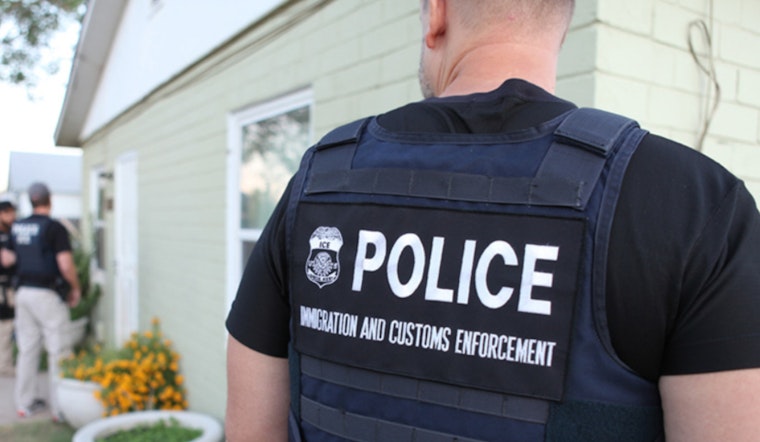
The city streets of Boston have become an arena for an increasingly public face-off between local authority and federal immigration enforcement, with Mayor Michelle Wu taking a strong stance against the Trump administration's border policies. In a move to bring more transparency to the matter, she has signed an executive order demanding that U.S. Immigration and Customs Enforcement (ICE) provide details on their arrest activities within the city, as reported by CBS Boston.
Wu's confrontation isn't just about data; it's a broader criticism of what she perceives as aggressive tactics by federal agents. She suggested ICE take a "time out," question the effectiveness of their methods, and consider the repercussions their actions might be having on community safety and trust. Enforcing her point, Wu noted, "We are taking every possible action here in our city to push back and to stand up for basic rights for our freedoms," in a statement obtained by Boston 25 News.
In response to the measures promulgated by City Hall, volunteers organized by Councilor Enrique Pepen have been patrolling neighborhoods, warning local businesses whenever ICE agents are spotted nearby. This grassroots network acts as an early warning system, aiming to protect residents and business owners from sudden immigration raids—a solidarity movement imparted by the city's resolve to look after its immigrant communities.
While the Boston leadership intensifies its challenge against federal immigration tactics, President Trump has remained adamant about his plans to continue removal efforts nationwide. He intends to clear the path for what he sees as the restoration of public safety, despite Mayor Wu's insistence that Boston doesn't need federal guidance on how to keep its streets safe. His administration's opposition seems to clash with Wu's vision for Boston's economic and cultural growth, underscoring an ongoing tension between local governance and national mandates.
ICE has kept a low profile in this municipal defiance, with neither comment on the mayor's actions nor on the administration's strategies moving forward. Still, acting ICE director Todd Lyons has cited security concerns as a reason for their personnel to wear masks during operations, as they've experienced personal threats in correlation with their duties. These realities unfold as Boston steers through an era of heated political confrontation—a test of resolve between a city's leadership and the federal machinery grinding away at its periphery.





