

























































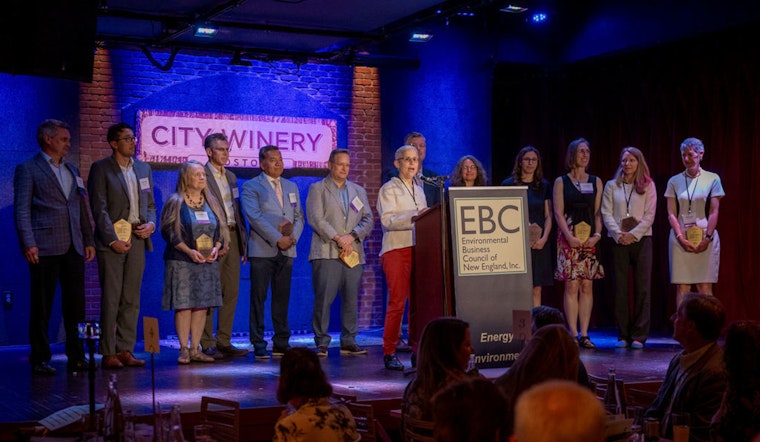
The city of Cambridge, in an effort that pairs environmental consciousness with innovation, has taken a giant leap toward carbon neutrality. Through a strategic partnership known as the Consortium for Climate Solutions, Cambridge will see its city operations go carbon-free by 2026. This initiative has earned them recognition and an award from the Environmental Businesses Council of New England, marking a significant achievement in renewable energy procurement, as per the City of Cambridge.
Highlighted with the Nicholas Humber Award for Outstanding Collaboration, the consortium, led by prominent institutions such as Harvard, MIT, and Mass General Brigham, broke new ground by navigating the complexity of financial and legal barriers. They managed to devise a model that simplifies the process for entities desiring to reduce their electricity emissions, as mentioned by Cambridge Climate Chief Julie Wormser.
The collaboration resulted in the support of renewable energy projects, including a wind farm in Bowman, North Dakota, and a solar initiative in Bell County, Texas. Virtual Power Purchase Agreements, or VPPAs, employed in these projects, provide a means for participants to obtain renewable energy certificates (RECs), which are instrumental in the reduction of carbon emissions. These innovative VPPAs are noted for their utility in states like Massachusetts where there's a strong push to meet carbon emission decrees, fuelling cleaner energy projects in regions that are still reliant on coal and oil for their grids.
Not only have these efforts been praised for their ingenuity, but also for the collective impact they symbolize. As echoed by Heather Takle, President and CEO of PowerOptions, the nonprofit organization which facilitated the VPPA negotiations, the success of the project represents the culmination of joint efforts aimed at tapping into sizable renewable energy resources and making substantive strides in emission reduction. This is underscored by the nearly a million metric tons of carbon dioxide expected to be retained from the atmosphere annually due to the consortium's VPPAs.
Cementing the importance of this collaborative approach, Harvard Chief Sustainability Officer Heather Henriksen described how joining forces with the city and smaller non-profits along with Harvard, MIT, MGB, and PowerOptions has created a renewable energy collective with a substantial impact beyond what any single institution could achieve alone. This partnership is setting an example that others might follow as Cambridge moves toward its ambitious 2050 or earlier goal for net zero greenhouse gas emissions. The city additionally gears up for the implementation of the Building Energy Use Disclosure Ordinance (BEUDO) next year, requiring large non-residential buildings to begin reducing their carbon emissions, a crucial step for addressing emissions from one of the largest local sources.


