

























































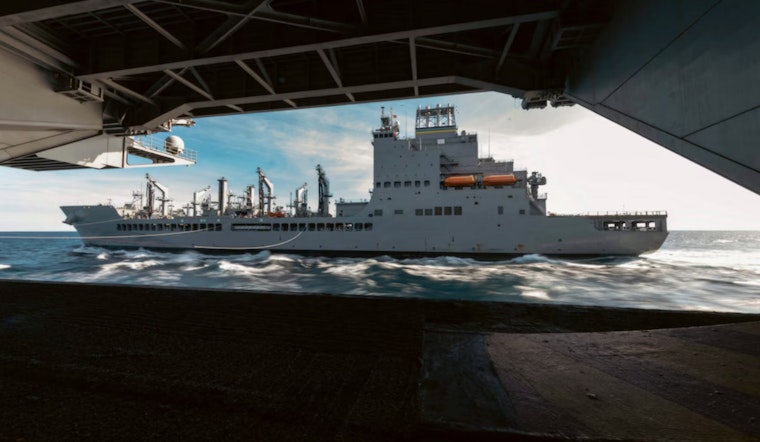
The City Council this week passed a resolution denouncing the federal government’s decision to rename several U.S. Navy ships that honor civil rights leaders and advocates for equality. Among the vessels targeted for a name change is the USNS Harvey Milk, named for the late gay rights activist and the first openly gay elected official in California. Despite the celebration of Pride Month, Milk’s namesake ship—along with others that carry the legacies of pivotal figures like Thurgood Marshall, Ruth Bader Ginsburg, and Harriet Tubman—is facing what the City of Boston's official website describes as an unwarranted clerical erasure.
Named after Milk in 2021, the USNS Harvey Milk acknowledges both his pioneering LGBTQ+ rights activism and his service in the U.S. Navy during the Korean War. Having suffered an unjust "Other Than Honorable" discharge because of his sexual orientation in 1955, the ship served as a powerful symbol of progress and inclusion. Following recent controversial military policies, including those against transgender service members, the council raised concerns that the move is a step backwards for representation.
In a robust response to what it sees as an attack on civil rights, the Council's resolution calls the timing and reasoning behind such changes into serious question. Asserting that to remove these names is to deny the advancement and recognition of LGBTQ+ individuals and civil rights leaders—especially in an institution like the armed forces, which has historically struggled with issues of inclusivity and fairness.
The ships under threat of renaming belong to the John Lewis class of replenishment oilers. Named in 2016 by then-Navy Secretary Ray Mabus, these vessels stand as testaments to a military that values diversity and strives for the full breadth of America's promise. Given the prestige of the individuals they're named after, including social reformers like Lucy Stone, Medgar Evers, and Cesar Chavez, the Council reaffirmed its commitment to upholding these figures as exemplars of the nation’s highest ideals. With a history punctuated by personal sacrifice and systemic struggle, these names tell a story vastly more significant than their mere letters.
As the controversy unfolds, the Council is appealing directly to the White House, requesting a reversal of the renaming decision. In an official statement, the Council stated that the names of the ships were intended to represent values associated with inclusivity and justice, and expressed concern about the potential implications of removing those names from naval tradition.


_13_December_2024.png)