

























































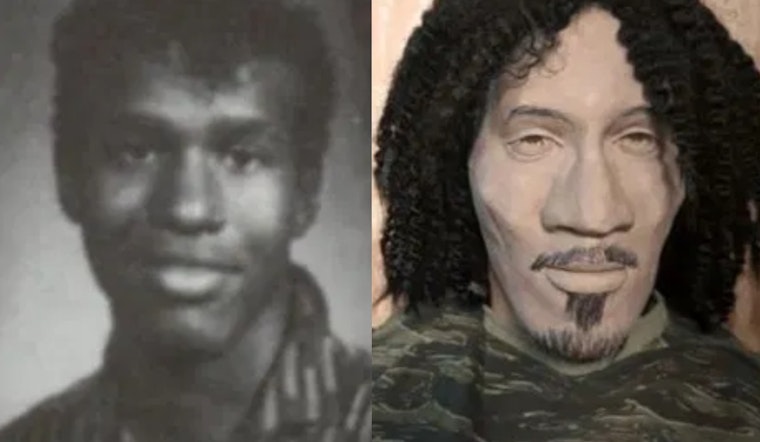
After nearly a quarter-century of uncertainty, Pueblo County Sheriff's detectives have finally identified the skeletal remains found in a field north of the city in November 2000. The man has been identified as Marvin Majors, a 34-year-old originally from Oklahoma who lived a transient lifestyle and had been out of contact with his family since the late 1990s.
The remains were discovered by a woman walking her dog in a field just north of the Walking Stick development, according to KRDO. At the time, only skeletal remains were found with no identification, making the case one of Colorado's many challenging unidentified person investigations.
DNA Technology Breakthrough
Detectives reopened the case in 2021 and found that the FBI had created a DNA profile in a national database, then collected new DNA samples from old evidence and submitted them to a genetic genealogy database in 2023 with help from the Colorado Bureau of Investigation. This approach reflects a growing trend in Colorado law enforcement, as reported by Denver7. Since 2018, dozens of cases in Colorado have been solved with investigative genetic genealogy.
In November 2024, a DNA match was made with a distant family member, which led to the identification of Majors' suspected sibling, as confirmed by KKTV. This past week, it was verified that the DNA comparison matched Majors.
Early Investigation Efforts
The initial investigation involved extensive efforts to identify the remains. The Pueblo County Coroner's office conducted an autopsy, and an anthropologist analyzed the remains to estimate key characteristics, while detectives worked for months and even used a sculptor from the University of Colorado who made a facial reconstruction using the man's skull to create a clay bust. According to The Gazette, in 2001, a sculptor from the University of Colorado reconstructed Majors' face into a clay bust, and after its release to the media, one rancher claimed to have seen Majors camping on his property in August, three months before his body was found.
Colorado's Cold Case Challenge
This breakthrough comes amid broader efforts to address Colorado's backlog of unsolved cases. The Colorado Springs Police Department Homicide Cold Case Unit is currently responsible for approximately 90 unsolved homicide cases dating back to 1949, with cases considered cold if they remain unsolved for more than one year, according to the Colorado Springs Police Department. Since 2011, there are 242 missing person cases in Colorado that remain open and unsolved, as reported by KEKB.
Nearly 340,000 cases of homicide and non-negligent manslaughter went unsolved from 1965 to 2021, with the number reaching nearly 346,000 cases through 2023, according to Project: Cold Case. The rate at which homicides are solved has been declining during the past five decades.
Recent Success Stories
The Majors identification represents part of a broader trend of cold case breakthroughs using genetic genealogy. As 2024 ends, police have solved some of the oldest cold-case murders using new crime-solving methods that didn't exist when the crimes occurred, with DNA and genetic genealogy technologies continuing to grow across the country, according to Psychology Today.
Family Closure
Majors' family shared that he lived a transient lifestyle and had not heard from him since around 1998 to 1999. The family said they hadn't seen him since the late 1990s and always wondered where he went, providing some measure of closure after more than two decades of uncertainty.
Pueblo County Sheriff David Lucero announced the solving of the 25-year-old case, stating "The years of dedication, diligence and perseverance by our detectives demonstrate that no matter how old a case is, they are committed to solving it. This was somebody's family member, and our team went above and beyond to identify him and to bring some closure to his family".



