

























































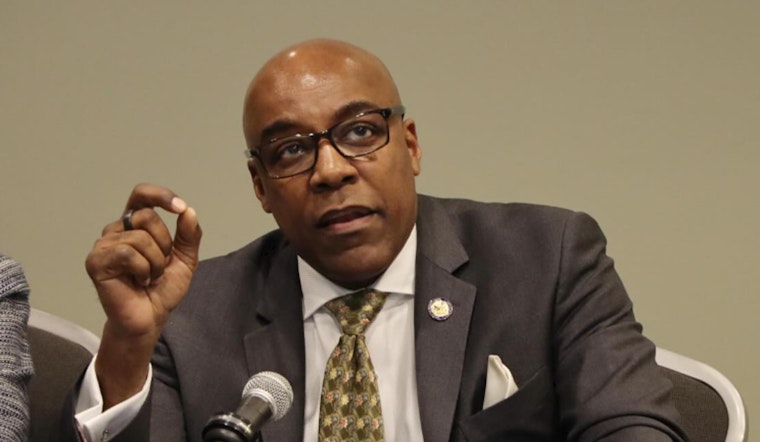
A federal judge has delivered a significant victory for national service programs across the country, ordering the Trump administration to restore hundreds of millions of dollars in AmeriCorps funding and reinstate thousands of volunteer service workers. The ruling represents a major win for Illinois Attorney General Kwame Raoul and a coalition of 24 other states that challenged the administration's abrupt dismantling of the federal volunteer agency.
U.S. District Judge Deborah Boardman issued an 86-page preliminary injunction on June 5, finding that the Trump administration likely violated federal law when it attempted to gut AmeriCorps without proper notice or public comment. The decision affects programs in the 24 states and the District of Columbia that joined the lawsuit, requiring the immediate restoration of approximately $400 million in grants and the reinstatement of service members who were abruptly discharged.
The Legal Battle
The lawsuit, filed in April in the U.S. District Court for the District of Maryland, came after AmeriCorps suddenly announced on April 25 that it was terminating grants to more than 1,000 programs nationwide. According to Reuters, the agency also placed approximately 85% of its workforce on administrative leave with plans to terminate them by June 24.
"Since 1993, approximately 1.3 million Americans have patriotically served their communities through AmeriCorps, assisting veterans and children and protecting the environment," Attorney General Raoul said in a statement, as reported by the Illinois Attorney General's Office. "The gutting of AmeriCorps is the latest example of the Trump administration's disregard for the Constitution to achieve their political goals."
The cuts were part of the administration's broader efforts through the Department of Government Efficiency (DOGE) to reduce the size of the federal government. Illinois alone faced the termination of 28 programs affecting 632 workers and volunteers, disrupting services that communities have relied on for decades.
Court's Reasoning
Judge Boardman's ruling centered on the administration's failure to follow proper procedures when making such sweeping changes. As detailed by Law and Crime, the judge found that the government "acted behind closed doors" when it terminated hundreds of service programs "in one fell swoop" on April 25.
"By law, the agency could only make those changes through public notice-and-comment rulemaking," Judge Boardman wrote. "Because the agency did not do so, the States have shown a likelihood of success that the agency actions were contrary to law, arbitrary and capricious, and without observance of procedures required by law."
The court emphasized that Congress had specifically mandated notice-and-comment procedures to prevent AmeriCorps from "pulling the rug out from under volunteer organizations and the communities they serve." According to The Spokesman-Review, the judge cited comments from Maryland Senator Barbara Mikulski, the principal author of the relevant amendment, who intended to prevent exactly this type of sudden disruption to volunteer programs.
Immediate Impact and Response
The preliminary injunction requires AmeriCorps to take several immediate actions. As reported by Spotlight PA, the agency must reinstate all grants terminated on April 25 in the plaintiff states and restore AmeriCorps National Civilian Community Corps members who were discharged early, if they are willing and able to return.
However, the court did not grant all the relief sought by the states. Judge Boardman ruled that the states lacked standing to challenge the mass layoffs of AmeriCorps staff, meaning the agency can still proceed with its planned reduction in force affecting hundreds of federal employees.
Pennsylvania Governor Josh Shapiro celebrated the ruling on social media, noting that AmeriCorps programs "help communities respond to natural disasters, support seniors and veterans, and keep our trails clean across Pennsylvania." New York Attorney General Letitia James also praised the decision, stating that "over 200,000 AmeriCorps staff and volunteers work hard every day to care for our communities," according to Fox News.
Broader Pattern of Legal Challenges
The AmeriCorps case represents just one of many legal battles between state attorneys general and the Trump administration over efforts to dramatically reshape the federal government. According to the New York Attorney General's Office, Democratic attorneys general have filed 15 lawsuits and 22 amicus briefs in the first 100 days of the Trump administration, challenging policies ranging from funding freezes to workforce reductions across multiple agencies.
Similar legal victories have been secured in other cases. As reported by STAT News, 22 states successfully obtained a temporary restraining order blocking the National Institutes of Health from slashing research funding. The Trump administration has also faced legal setbacks in its attempts to cut funding for education programs and reduce workforce levels at various federal agencies.
The administration has defended its actions as necessary to restore accountability and eliminate waste. White House spokeswoman Anna Kelly told The Washington Post that AmeriCorps "failed eight consecutive audits and identified over $45 million in improper payments in 2024 alone." She added that "President Trump has the legal right to restore accountability to the entire Executive Branch."
What Happens Next
The preliminary injunction is not the final word in this case. As noted by Connecticut Mirror, the Trump administration has indicated this "will not be the final say on the matter," suggesting appeals are likely.
In the meantime, Judge Boardman has ordered AmeriCorps to file a compliance status report by June 10, demonstrating that it has taken steps to restore the terminated grants and reinstate service members. The court emphasized that any future changes to AmeriCorps program delivery must go through the formal rulemaking process as required by federal appropriations law.
The coalition of states bringing the lawsuit includes Maryland, Delaware, California, Colorado, Arizona, Connecticut, Hawaii, Illinois, Kentucky, Maine, Massachusetts, Michigan, Minnesota, Nevada, New Jersey, New Mexico, New York, North Carolina, Oregon, Pennsylvania, Rhode Island, Vermont, Washington, Wisconsin, and the District of Columbia.
Legal Implications
This case raises significant questions about the scope of executive power and the requirements of administrative law. Legal experts note that the ruling reinforces longstanding principles that agencies must follow proper procedures when making significant policy changes, particularly when those changes affect congressionally authorized programs.
The court's decision also highlights the tension between the administration's goal of reducing government spending and the legal constraints on how such reductions can be implemented. While the president has broad authority to manage the executive branch, this authority is not unlimited and must be exercised within the framework established by Congress.
For now, AmeriCorps programs in the plaintiff states can continue their vital work serving communities, though uncertainty remains about the agency's long-term future and the fate of its federal workforce.





