

























































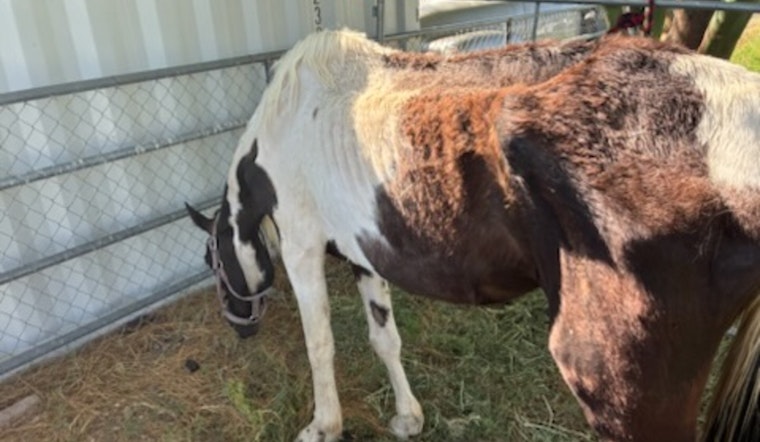
Picture this: you're driving through a quiet south Phoenix neighborhood when you spot a brown and white horse wandering aimlessly, clearly malnourished and alone. That's exactly what happened recently near 66th Avenue and Ellis Drive, and it's become the latest heartbreaking chapter in Arizona's growing animal cruelty crisis.
The Maricopa County Sheriff's Office is now playing detective, trying to piece together how this horse ended up in such dire straits. "The horse is now safe and receiving care, but we need help identifying the owner or how the horse ended up in this condition," according to Fox 10 Phoenix, which first broke the story.
When Numbers Tell a Troubling Story
Here's where things get really concerning—this isn't just an isolated incident. Arizona is experiencing what can only be described as an animal welfare emergency. The Arizona Humane Society's numbers are jaw-dropping: they responded to over 16,000 calls for services in 2024 and worked over 10,000 cruelty cases. That's a staggering 31% increase in service calls and a 29% increase in cruelty calls over just two years, as reported by KJZZ.
"We've responded to too many calls where animals have algae in their water, maggots in their food, and their only shelter is a hole under an abandoned car," Tracey Miller, Director of Field Operations for the Arizona Humane Society, told ABC15. "Right now, that's all legal."
Politicians Actually Trying to Fix Something
In a rare display of bipartisan cooperation, Arizona lawmakers are working on legislation that would give these cases some teeth. The bills moving through the legislature would clearly define what constitutes animal cruelty—because apparently, we needed to spell out that animals deserve food, water, shelter, and medical attention.
The push gained momentum after a particularly horrific case in Chandler where 55 dogs were seized from April McLaughlin's home. According to Cronkite News, veterinarians couldn't even properly document the abuse because current laws are so vaguely written.
The Sheriff's Office Has a Whole Unit for This
The Maricopa County Sheriff's Office runs what they call a "unique" Animal Cruelty Investigations Unit that's been leading the charge in enforcing animal protection laws. According to their website, if you suspect animal abuse, you can call (602) 876-1011.
But here's where it gets complicated: horses fall under the jurisdiction of the Arizona Department of Agriculture, not local animal control. The state agency handles thousands of calls annually about livestock neglect, and their officers can seize animals when lives are in immediate danger.
Economic Reality Meets Animal Welfare
Let's be honest about what's driving some of this crisis: money. The Valley's cost of living isn't what it used to be, and when people are struggling to pay their own bills, animals often suffer first. KJZZ noted that rising prices are hitting local animal shelters hard as financially strapped families surrender pets they can no longer afford.
This isn't just an Arizona problem. During Texas's brutal 2011 drought, horse abandonment reached crisis levels when feed costs skyrocketed. Safe Haven Equine Rescue in Gilmer reported getting "20 to 40 calls a week that horses are alongside the road and left," compared to their usual three or four weekly calls, Reuters reported at the time.
Justice Gets Serious (Finally)
Arizona has been toughening its approach to animal crimes. Thanks to recent legislative changes, according to the Animal Defense League of Arizona, "egregious cruelty cases will now be charged as a higher class 5 felony, which cannot be plea bargained down to a misdemeanor." Translation: animal abusers can't sweet-talk their way out of serious consequences anymore.
Horse abandonment is already a crime under state law, requiring sheriff's departments to hold abandoned horses for 18 days before they can be sold at livestock auctions.
The Case Continues
The investigation of the wandering horse near 66th Avenue and Ellis Drive is ongoing. The Maricopa County Sheriff's Office is asking anyone with information about this particular animal to call their tip line at 602-876-TIPS (8477). The horse is getting the care it needs, but the bigger question remains: how do we prevent more animals from ending up in similar situations?
This case represents something larger than one neglected horse. It's a snapshot of a state wrestling with animal welfare challenges that seem to multiply faster than solutions can be implemented. The good news? People are paying attention, and lawmakers are actually trying to do something about it.




