

























































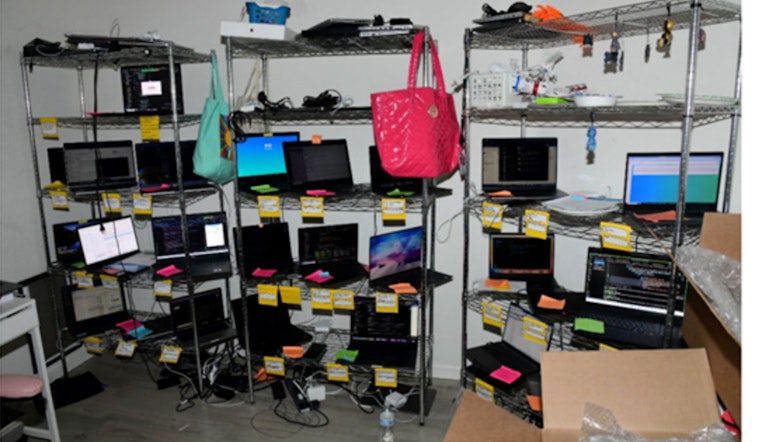
An Arizona woman has been handed a sentence of 102 months in prison for facilitating a multi-million-dollar fraud scheme that propped up illicit revenue streams for North Korea by aiding IT workers from the DPRK in posing as American workers for U.S. companies. The U.S. Department of Justice reported that Christina Marie Chapman, 50, from Litchfield Park, Arizona, engaged in conspiracy to commit wire fraud, aggravated identity theft, and a conspiracy to launder money, which ultimately generated over $17 million for North Korea. Upon pleading guilty earlier this year, beside her prison term, Chapman faces three years of supervised release and has been ordered by U.S. District Court Judge Randolph D. Moss to forfeit a sizable sum and pay a hefty judgment.
According to a statement from Acting Assistant Attorney General Matthew R. Galeotti of the Justice Department's Criminal Division, Chapman's long-standing scheme victimized over 300 American companies and government agencies, and was successful in stealing identities from U.S. citizens in the service of a foreign adversary. U.S. Attorney Jeanine Ferris Pirro for the District of Columbia made clear the insidious nature of the threat, stating, "North Korea is not just a threat to the homeland from afar. It is an enemy within." Pirro emphasized the severity of the threat, highlighting the damage to both national security and corporate integrity.
The FBI Counterintelligence Division's Assistant Director Rozhavsky pointed out the critical support that Chapman provided to the North Korean regime, which seeks to strengthen its nuclear program through such fraudulent activities. Rozhavsky stressed that Chapman's sentencing sends a strong message that the FBI, alongside its partners, will relentlessly pursue and hold accountable those who aid adversaries of the United States. The details of the case reveal a sophisticated plot where Chapman maintained a so-called "laptop farm" at her residence to facilitate the work of North Korean IT workers, deceiving U.S. companies into believing the work was being done domestically.
Special Agent in Charge Heith Janke of the FBI Phoenix Field Office highlighted not only the lengths to which the North Korean government will go to fund illicit activity but also the U.S. law enforcement's unwavering commitment to dismantling these operations. In a similar vein, IRS-CI Phoenix Field Office's Special Agent in Charge Carissa Messick underscored that despite the intricate nature of the scheme, justice prevails in safeguarding victims' identities and national security. The network Chapman operated used stolen identities to falsely report millions to the IRS and the Social Security Administration, through which payroll checks were forged and proceeds transferred internationally.
This case was a collaborative effort involving multiple agencies, such as the IRS-CI Phoenix Field Office and the FBI Chicago Field Office. The collaborative effort further extended to the FBI Phoenix being responsible for the issuance of guidance specifically targeted at HR professionals to detect North Korean IT workers. Moreover, both the Department of State and the FBI have continually updated advisories to the public and private sectors on the threat imposed by North Korean IT workers and the critical role U.S. persons have unwittingly played as facilitators.





