

























































An Arizona woman has been sentenced to over eight years in prison for her part in a fraud scheme that provided North Korean IT workers with fake US identities, enabling them to secure jobs at American companies. The Department of Justice announced that Christina Marie Chapman, 50, from Litchfield Park, Arizona, was given a 102-month sentence after pleading guilty to charges including conspiracy to commit wire fraud, aggravated identity theft, and conspiracy to launder monetary instruments.
These illicit operations, according to the Justice Department, supported the Democratic People’s Republic of Korea (DPRK or North Korea) and netted over $17 million in revenue. Chapman was also ordered to forfeit $284,555.92, which was meant to be paid to the North Korean entities, and pay a judgment of $176,850. Acting Assistant Attorney General Matthew R. Galeotti highlighted the severity of the crimes, stating, "Christina Chapman perpetrated a years’ years-long scheme that resulted in millions of dollars raised for the DPRK regime, exploited more than 300 American companies and government agencies, and stole dozens of identities of American citizens," as reported by the Justice Department.
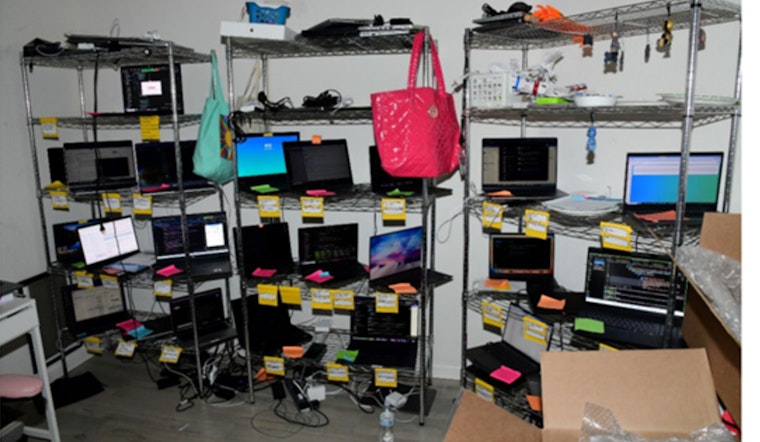
The sophisticated operation run by Chapman included a "laptop farm" at her residence, where she deceived US companies into believing the work was conducted domestically. The scheme involved more than 68 stolen identities, with the fraud extending to 309 US businesses, including prominent names in technology, aerospace, automotive, luxury retail, and media. Assistant Director Rozhavsky of the FBI’s Counterintelligence Division emphasized the extensive nature of the scheme: "However, even an adversary as sophisticated as the North Korean government can't succeed without the assistance of willing U.S. citizens like Christina Chapman," he told the Justice Department.
As part of the conspiracy, Chapman facilitated the falsification of income reports to the IRS and the Social Security Administration in the names of the stolen identities. She also managed payroll checks and direct deposits, ultimately transferring the proceeds to international recipients. Special Agent in Charge Carissa Messick of the IRS Criminal Investigation Phoenix Field Office underlined the complexity of the operation and the resolve of law enforcement to combat such threats, saying, "The scheme was elaborate. If this sentencing proves anything, it’s that no amount of obfuscation will prevent IRS-CI and our law enforcement partners from tracking down those that wish to steal the identities of U.S. nationals, launder money, or engage in criminality that jeopardizes national security," according to the Justice Department statement.
FBI Phoenix, in a coordinated effort, has issued guidance for HR professionals to help identify North Korean IT workers, and the Department of State has also released guidance on the threat they pose. Previous advisories from the FBI, State Department, and the Department of the Treasury have warned of the meticulousness of these threat actors. The prosecution of Chapman's case was handled by the Criminal Division’s Computer Crime and Intellectual Property Section and the U.S. Attorney's Office for the District of Columbia, with assistance from several FBI field offices and the IRS-CI Phoenix Field Office.





