

























































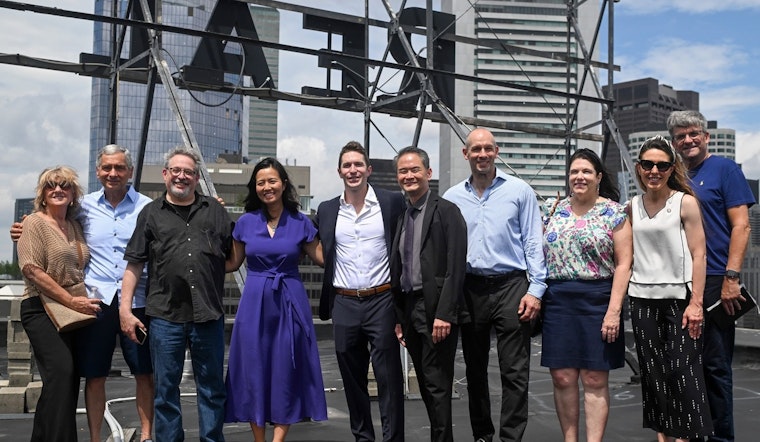
In Boston, Mayor Michelle Wu and city officials have recently commemorated the start of construction on the first batch of over 100 housing units, previously office spaces, a significant advancement in the city's effort to revitalize the downtown area. Part of the larger Office to Residential Conversion Program, this initiative is set to transform 141 units across several locations, with addresses such as 263 Summer Street, 129 Portland Street, 615 Albany Street, and 281 Franklin Street making the transition. In particular, the projected completion of homes at 281 Franklin Street is eyed for the end of this summer season.
"Boston is building the foundation for a stronger, more vibrant downtown through our dedication to housing, public safety, and economic growth," Mayor Wu stated on the City of Boston, highlighting the Program's role in addressing both commercial vacancies and housing needs. The program has led to a notable increase in downtown foot traffic and a nearly 50% reduction in commercial vacancies. Released statements, including one from Chief of Planning Kairos Shen, echoed the sentiment, asserting the conversions would support a dynamic, 18-hour downtown neighborhood in the face of post-pandemic economic changes.
One standout project at 263 Summer Street, located within the Fort Point historic district, will not only introduce 77 new homes but will also retain the notable Boston Wharf Co. sign, linked to the city's past. This locale is notably an Article 80 Large Project and is conveniently connected to South Station, offering greater regional access. Owner of Burns Realty & Investments, Adam Burns praised Mayor Wu's leadership, stating, "Your leadership has turned what could have been a crisis into a catalyst for reinvention," in a comment obtained by the City of Boston's official press release.
In relation to the ongoing developments, 129 Portland Street will be seeing the inception of 25 homes, marking the inaugural residential project in the Bulfinch Triangle created by recent zoning amendments. Similarly, at 615 Albany Street, what was once the old Naval Blood Research Laboratory will integrate an additional floor to house 24 more units. Both projects, among others, contribute to the cumulative impact the Office to Residential Conversion Program intends on Boston's housing market and community revitalization. Greg McCarthy of Construo Development mentioned his enthusiasm for being part of such transformative work in a statement acquired by the City of Boston's news update.
The program's broader scope involves 16 applications so far to convert 620,000 square feet of office space into 780 units of housing, 142 of which are income-restricted. The Office to Residential Conversion Program has also been augmented to embrace student and workforce housing this spring, and it offers a substantial 75% tax abatement for 29 years as an incentive to developers. The program application window extends to the end of the year, with an expectation for approved projects to initiate construction by December 31, 2026.





