

























































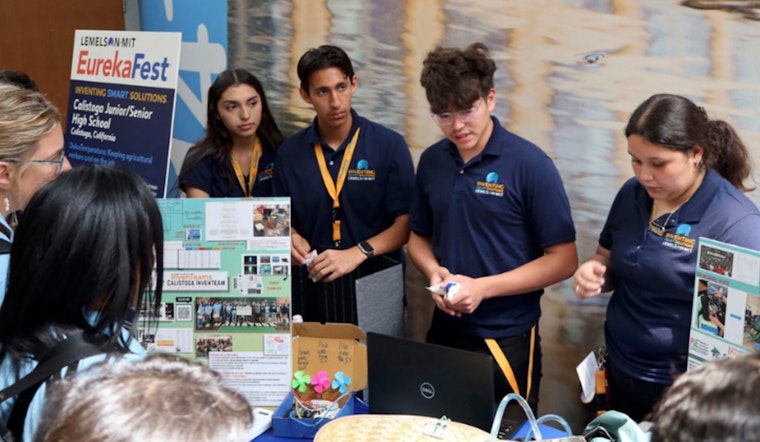
Turning high schoolers into bona fide inventors, the Lemelson-MIT InvenTeams Grant Initiative is giving teens the tools and funds to jump into the world of STEM head-on. Case in point, the students from Calistoga Junior/Senior High School in California—who, for their part, whipped up a cooling system prototype for firefighters and field workers grappling with intense heat. Their work didn't just hang on the walls of their school; it took them all the way to the MIT capstone event, Eurekafest, and even the California State Capitol where they pitched the invention to lawmakers and found themselves among finalists in the SXSW Innovation Awards, as MIT News reported.
The InvenTeams program, now in its 22nd year, extends $7,500 grants to high schoolers across the U.S., pushing them to tackle real-world problems through invention. This encouragement has led students to hold 19 U.S. patents since its inception. "In a traditional school setting, students don’t always get the chance to show what they can do," Heather Brooks, the educator behind the 2023 Calistoga team, shared in an interview with MIT News. Her reflection mirrors many tales of confidence boosts and a newfound zeal for the sciences amongst participants.
The genesis of the program aligns with the vision of its founder, Jerome Lemelson, to vault inventors to the status of rock stars and sports heroes. According to Stephanie Couch, Lemelson-MIT Executive Director, Jerome believed that "America’s strength and innovation was driven by invention." The program began focusing on the younger demographic with smaller grants around 2006, which has proven to amplify interest in STEM fields significantly. This strategy was in response to insights from a National Science Foundation report suggesting the best methods to nurture fledgling inventors.
Each year, droves of teams across the country, somewhere between 50 and 80, throw their hats into the ring for the Excite Awards. The judges, bearing diverse expertise, sift through applications detailing patent research, problem descriptions, and even plans for community involvement. The finalist teams, as MIT News stated, stay at MIT dorms, engage in a slew of networking opportunities, and finally, present their inventions to the public and a panel of judges at Eurekafest. The 2023 presentations featured inventions like a communication tool for rowers from Cambridge, Massachusetts, and high-tech drinking water contamination detectors.
What's more, the InvenTeams initiative boasts success stories that extend beyond the classroom. A team from a California high school notably created a cost-effective sensor to aid diabetic patients in 2018, capturing the attention of their previously budget-conscious district officials, which brought a positive swing for school resources and recognition for the students' ingenuity. To further the reach of such inventive education, the Lemelson-MIT program launched Partners in Invention Education, a membership curriculum that spans from kindergarten up to college underclassmen. Stressing the value of this hands-on learning, Edwin Marrero, interim invention education manager, pointed out the engagement this strategy brings: "They might discover they need math or science skills to solve the problem they’re working on, and it creates a different level of motivation."



