

























































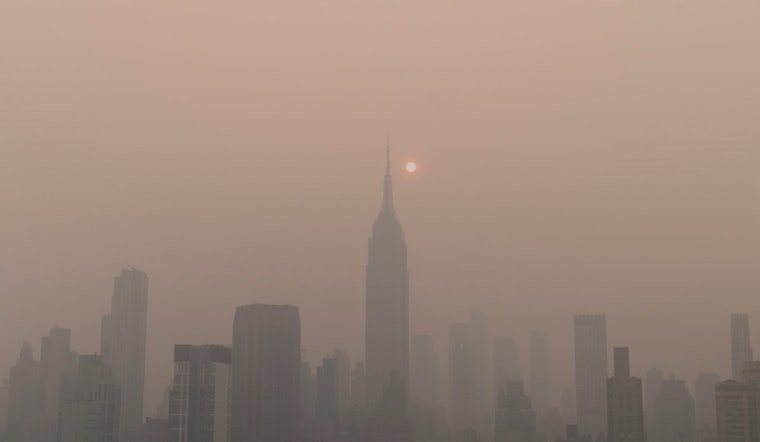
The Tri-State Area is experiencing smoky air due to Canadian wildfires, resulting in air quality alerts today. According to a statement from New York City Emergency Management shared by ABC7 New York, people—especially those with heart or lung conditions—should limit time outdoors and expect a smoky smell and reduced visibility.
The same northerly winds that brought the smoke also helped lower recent high temperatures, according to ABC7 New York. However, the heat is expected to return early next week with a new heat advisory. Those most at risk from the poor air quality include older adults, young children, pregnant individuals, and people with heart or respiratory issues like asthma. Sunday's Air Quality Index is expected to reach Level Orange, meaning conditions may be unhealthy for these groups.
Meanwhile, the New York State Department of Environmental Conservation added its voice to the concern, issuing an air quality warning from 11 a.m. to 11 p.m. and highlighting elevated ozone levels, FOX 5 NY reported. According to Laura Kate Bender of the American Lung Association, children are especially vulnerable due to their developing lungs and higher breathing rate relative to their body weight.
The Suffolk County Department of Health Services also weighed in, stating that "Fine particles can travel deeply into the respiratory tract, reaching the lungs." The Department's statement issued to ABC7 New York warned that exposure to such particles from wildfire smoke can lead to coughing, sneezing, and shortness of breath. The health impacts of such exposure may be acute, especially for people with existing health concerns.
Detailed metrics about the daily air quality index can be accessed via AirNow.gov, a resource also mentioned by FOX 5 New York. The index provides guidance on the level of pollutants present in the air, indicating how the air quality may influence outdoor activities, particularly for sensitive groups. Actions such as staying indoors, using air purifiers, and donning high-quality masks are recommended to mitigate the health risks posed by the presence of particulate matter in the air. These precautions are particularly important for residents in the affected areas until the smoke-laden air clears.





