

























































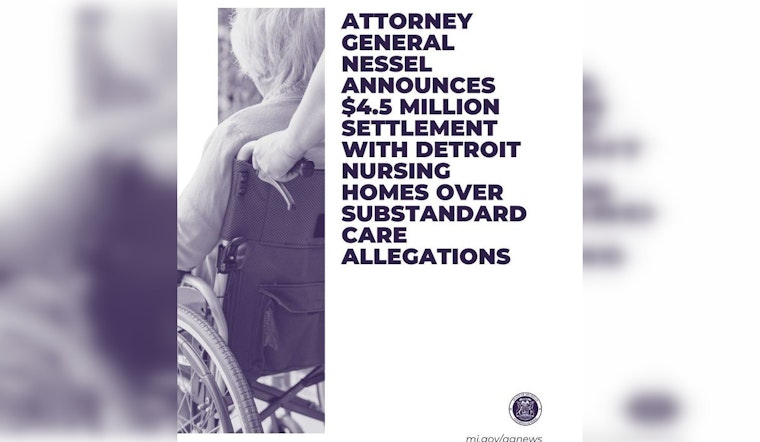
Michigan's Attorney General Dana Nessel recently struck a settlement to the tune of $4.5 million against six Detroit-area nursing homes over serious allegations of subpar care. The settlement was made with Villa Financial Services LLC and Villa Olympia Investment LLC, the parent companies of the facilities which include the Ambassador, Father Murray, Imperial, Regency, St. Joseph’s, and Westland nursing homes. This financial recovery follows claims that taxpayer dollars were used to support services that were severely lacking in meeting basic care standards.
In a statement made by Michigan's official government website, the lawsuit, initially triggered by whistleblower complaints from Villa employees, alleged failures to adequately staff the nursing homes and prevent or effectively address infections and falls. Moreover, residents were reportedly left to remain in soiled bedding and clothing for extended periods and suffered from pressure ulcers due to neglect. Despite these allegations, Villa has publicly denied any wrongdoing.
Attorney General Nessel, referencing the chronic neglect in nursing homes as "absolutely unacceptable," stated, "American taxpayers contribute billions every year to ensure quality care for our most vulnerable. When that care is not provided, my office will continue to work alongside our federal partners to hold those responsible accountable," as reported by Michigan's official website.
The terms of the agreement require Villa to pay most of the settlement amount to the United States, about $3,418,633, while Michigan will receive $1,081,367. Moreover, Villa is now beholden to enter into a five-year Corporate Integrity Agreement (CIA) with the U.S. Department of Health and Human Services - Office of Inspector General. This agreement mandates the company to extensively review and improve its delivery of care to residents. An independent monitor will oversee this process, aiming to ensure that Villa is able to better prevent, detect, and promptly react to issues related to patient care.
Funding for the Health Care Fraud Division (HCFD) of the Attorney General's office, which handled the case, comes in large part from the U.S. Department of Health and Human Services, providing three quarters of its budget. The HCFD, which is the certified Medicaid Fraud Control Unit for Michigan, received over $5.7 million in federal funding for fiscal year 2025, with the state providing the remaining 25 percent or approximately $1.9 million.





