

























































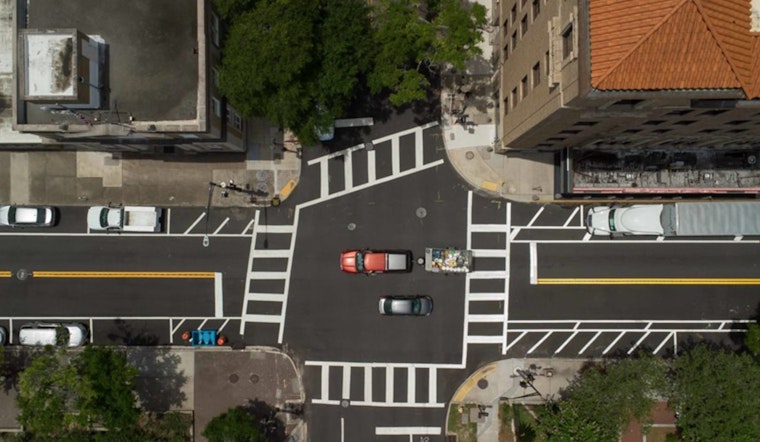
In a notable shift aimed at spurring downtown revitalization, Jacksonville has reopened sections of Forsyth and Adams Streets to two-way traffic. Jacksonville Mayor Donna Deegan highlighted the move as a critical step in fostering a more vibrant, pedestrian-friendly downtown, stating, "This marks a major milestone in our vision to revitalize Downtown." She looks forward to the return of walkability and communal spaces over the previous car-centric design, as reported by City of Jacksonville's official announcement.
The project's first phase entailed upgrades to traffic signals and new pavement markings for the conversion from Jefferson to Liberty Streets. For decades, city planners have sought to reverse the mid-20th-century trend that made these streets one-way to prioritize cars' swift passage. The current changes have now set the stage for wider sidewalks and a greener urban landscape. However, in a reporting by the City of Jacksonville, the mayor mentioned that the streets, before becoming one-way in the late 1930s, had accommodated two-way traffic for over a century.
The two-way street concept isn't just about traffic flow; it's expected to boost the local economy. Businesses will enjoy higher visibility and pedestrians will benefit from a safer environment, with activities and life refilling the urban thoroughfares. It's a shift from transit efficiency to quality of life, hoping to see a rise in retail occupancy rates and residential demand.
As outlined in the Downtown master plan, revitalizing downtown Jacksonville has been an ongoing ambition. The shift to two-way traffic is seen as essential to this vision, with dedicated funding for its implementation provided by the Downtown Investment Authority. The mayor emphasized the cumulative benefits, including "greater retail visibility and occupancy rates; improved walkability and pedestrian safety; increased sidewalk activity, and elevated residential demand and quality of life," as outlined in the City's announcement.



