

























































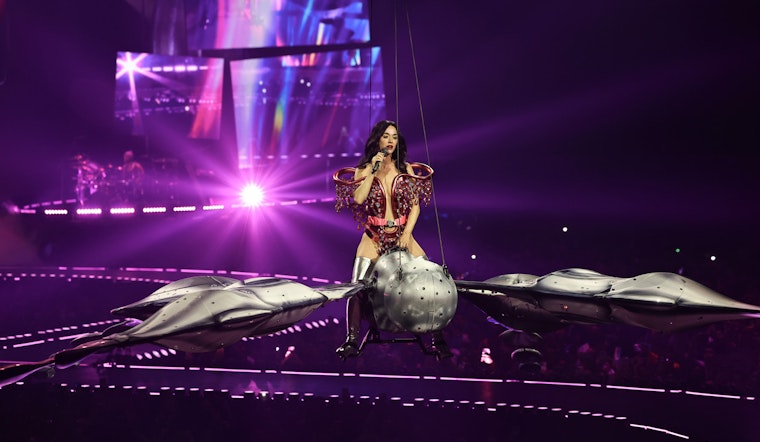
Pop superstar Katy Perry experienced a terrifying midair malfunction during her Friday night performance at San Francisco's Chase Center, when a massive mechanical butterfly prop suddenly dropped several feet while carrying the singer above the audience.
During her performance of the 2013 hit "Roar," Perry was seated atop the butterfly prop designed to soar over the crowd when the rigging system suddenly malfunctioned, according to CBS News. Fan-captured videos posted across social media platforms showed the 40-year-old singer visibly startled as she gripped the prop to maintain her balance while it swayed precariously above the crowd.
Perry's Professional Response Under Pressure
Despite the frightening moment, Perry demonstrated remarkable composure, pausing her vocals only briefly before continuing with the performance. The incident occurred during the chorus of "Roar," and after regaining her stability, she completed the song with the defiant line "and you're gonna hear me roar." As the song concluded and lights dimmed, Deadline reported Perry quipped "Not today, Satan," drawing cheers from the concerned audience.
Following the show, Perry addressed the incident with characteristic humor on her Instagram Stories, posting a screenshot of her shocked expression with the caption "Good Night San Fran," as reported by Billboard.
Chase Center Safety Considerations
The incident occurred at Chase Center, located at 1 Warriors Way in San Francisco's Mission Bay neighborhood. The venue has previously faced safety scrutiny following a tragic incident in October 2021, when one concertgoer died and two others were injured during separate falling incidents at a Phish concert, according to the San Francisco Chronicle. Following those incidents, the San Francisco Department of Building Inspection conducted a comprehensive safety review, ultimately determining the facility met all applicable building codes.
The 18,064-seat arena opened in 2019 as the home of the Golden State Warriors and hosts nearly 200 events annually, including major concerts and sporting events.
Concert Industry Safety Protocols
Perry's malfunction highlights the inherent risks of elaborate aerial staging in modern concert productions. According to Ontario government safety guidelines, performer flying and aerial stunts "involve much greater potential for serious or fatal injury than normal performance activities," requiring specialized rigging coordinators and fall arrest systems.
Concert industry experts note that while aerial stunts have become increasingly elaborate to meet audience expectations for spectacular performances, the complexity introduces additional points of failure requiring rigorous safety protocols.
Context of Recent Industry Incidents
Perry's incident comes amid a summer that has seen several high-profile prop malfunctions affecting major touring artists. CBS News reported that Beyoncé experienced a similar malfunction during her Houston performance on June 29, when her flying car prop tilted dramatically while suspended over the crowd. Additionally, Variety noted Perry had experienced a previous malfunction during her Australia tour stop in June, when a metal sphere prop began tilting mid-performance.
Tour Continues Despite Setbacks
Perry's Lifetimes Tour, supporting her seventh studio album "143," represents her first major concert run in seven years. The tour launched in Mexico City in April and is scheduled to conclude in Abu Dhabi on December 7, featuring multiple aerial sequences and elaborate staging elements, according to Wikipedia.
Despite the recent safety concerns, Perry is set to continue the tour with her next performance scheduled for Monday in Seattle. The 13-time Grammy nominee, who helped define 2000s pop music with hits like "Teenage Dream" and "Firework," recently made headlines for her participation in Blue Origin's historic all-female space flight alongside CBS News' Gayle King and other notable figures.
Representatives for Perry and Chase Center did not immediately respond to requests for comment regarding the incident or any potential changes to safety protocols for future performances.




