

























































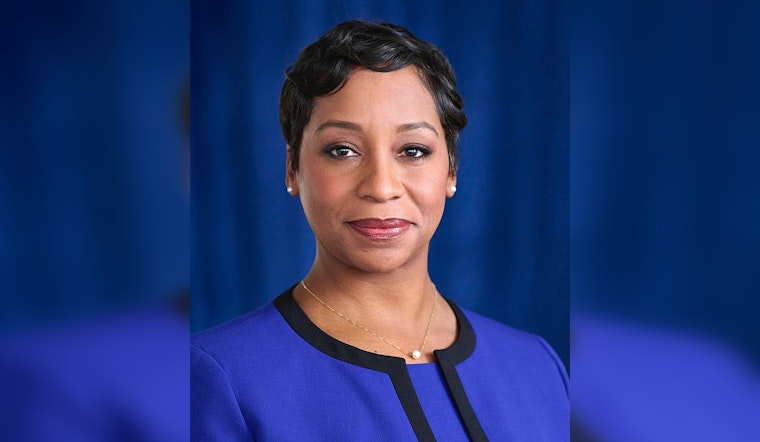
In a significant legal push to safeguard the stability of over half a million immigrants, Massachusetts Attorney General Andrea Joy Campbell has taken a front-line position. She's co-leading a group of attorneys general, urging the U.S. Court of Appeals for the First Circuit to side with humanity and legal precedent by upholding a crucial humanitarian parole program. This coalition, a meld of 17 states' top legal officers, is drafting their arguments with a clear message: the rights of immigrants from Cuba, Haiti, Nicaragua, and Venezuela are non-negotiable, as detailed in a recent publication by the Massachusetts Attorney General's office.
The CHNV (Cuban, Haitian, Nicaraguan, and Venezuelan) parole program, brought into being beneath the wing of the Biden-Harris Administration, serves as a vital liferaft for individuals fleeing from precarious situations in their home countries. Designed to grant temporary but legal working residency in the U.S., this initiative aims to provide these communities a semblance of stability on two-year terms. The termination of this program by the Trump Administration attempted to swiftly upend this security, calling forth the legal challenge in question. "The Trump Administration’s termination of humanitarian parole is a prime example of this Administration's abuse of power and mistreatment of immigrants," AG Campbell was quoted, sharply criticizing the prior administration's moves in the official statement.
The concern isn't merely humanitarian. The economic stakes are high, with these immigrants contributing significantly to local and national economies. Facts stand firm: immigrants injected over $651 billion in taxes nationwide in 2023, with Massachusetts receiving a chunk estimated at $6.6 billion, as reported by the Massachusetts AG's office. Furthermore, these individuals wield a combined spending power of $51.8 billion, embedding themselves as crucial participants in states' economies and labor forces alike. More than simple numbers, these contributions reflect an interdependence where both local communities and the immigrants themselves benefit from a symbiotic relationship, precariously hinged on the continuation of CHNV parole.
The coalition of attorneys general is hammering home the point that legal chaos will ensue should the program be retracted. It's not just about upholding a legal status; it's about preventing a social and economic unraveling. The consequences of such an act reach further than lines on paperwork; they impact real people with jobs like the 800–1,000 CHNV parolees currently employed in critically understaffed nursing facilities and in roles within the sphere of special education, as noted by the Massachusetts Attorney General's office. The critical need to maintain this program underscores a deeper acknowledgment: these residents are more to us than mere figures or abstract entities; they are integral threads woven into the fabric of our collective lives.
AG Campbell's fellow leaders in this legal charge hail from New York and Illinois, with additional support from attorneys general across California, Connecticut, Delaware, District of Columbia, Hawai’i, Maine, Maryland, Minnesota, Nevada, New Jersey, Oregon, Rhode Island, Vermont, Washington, and Wisconsin. This united stance sends a resonant message advocating for the continuation of the CHNV parole program. The fight, at its core, isn't solely rooted in legal statutes or documented arguments. It's a struggle for dignity, stability, and the upholding of a promise America has extended — a promise of refuge and opportunity.



.jpg)