

























































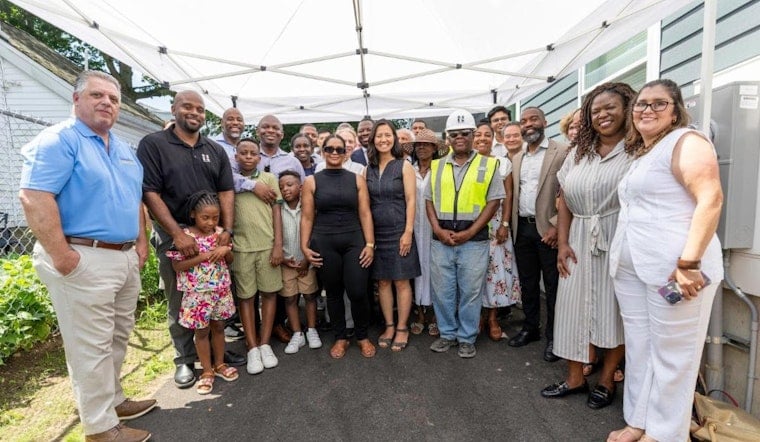
Mayor Michelle Wu of Boston recently presided over a community gathering in Dorchester to celebrate the latest achievements in the city's home ownership initiatives. The event also marked the announcement of the third phase of the Welcome Home, Boston program, a key part of Mayor Wu's strategy to close the racial wealth gap in the city, as reported by the City of Boston's official news release.
During the celebration, new homeowner Genesis, who purchased a home on Elmont Street, was spotlighted. The Mayor underscored that "Homeownership is one of the most powerful tools we have to build generational wealth and keep neighborhoods strong," according to the City of Boston news release. She also lauded local developers, particularly those of color, for partnering with the City and the Boston Home Center to facilitate more affordable home buying opportunities.
Welcome Home, Boston's first two phases have already seen significant progress, with 28 parcels developed into 144 future homes, many of which are under construction or closing. Phase three will see an additional 12 parcels transformed into over 30 new homes for first-time middle-income homebuyers in various Boston neighborhoods. Developers are encouraged to submit proposals that demonstrate innovation and alignment with Boston's sustainability goals. Chief of Planning Kairos Shen noted the city's efforts in leveraging public land to address the pressing need of middle-income housing, according to the City of Boston announcement.
Sheila Dillon, Chief of Housing, emphasized the administration's achievements, stating that "The Wu administration has made increasing homeownership rates in Boston a reality." She outlined the City of Boston array of support mechanisms, such as affordable homes, downpayment programs, and lower interest rate mortgage products. These efforts have helped over 1,000 Boston residents become first-time homeowners during Mayor Wu's tenure, with more than 65% of those assisted identifying as BIPOC.
The broader impact of these initiatives on the community was highlighted by Frank Farrow, Executive Director of the Office of Black Male Advancement, and Tito Jackson, Chair of the Black Men and Boys Commission. They shared a sentiment that homeownership is a pivotal instrument in advancing equity and enriching the lives of Black residents in Boston, creating stronger and more connected communities, as per the City of Boston.
Additionally, The Boston Home Center has played a crucial role in this strategy, offering homebuyer education, financial support for downpayments and closing costs, and the One+ Boston mortgage program. MassHousing CEO Chrystal Kornegay praised these efforts for contributing to a more affordable Massachusetts and aiding in family stability. For individuals like Genesis, the new homeowner, the experience has been life-changing. She expressed her appreciation for the support the City of Boston provided, saying, "This opportunity has allowed me to establish long-term stability for my children and build a future rooted in the city we love." These narratives echo the administration's commitment to not just creating housing units but fostering a sense of belonging and security for its people.
More information about the Mayor's Office of Housing and the planning department's role in shaping a more inclusive Boston can be found on their respective websites. Both departments are dedicated to addressing homelessness, affordable housing, and stable housing for renters and homeowners, and they are actively seeking solutions to build more accessible housing for lower-income residents, as reported by the City of Boston.



