

























































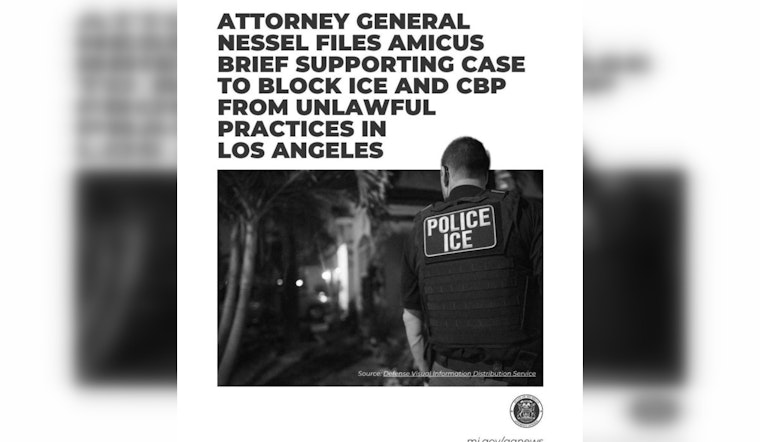
Michigan Attorney General Dana Nessel has joined a coalition opposing immigration enforcement practices in Los Angeles that are described in legal filings as aggressive and potentially unlawful. Nessel, along with attorneys general from 17 other states, has filed an amicus brief in support of the plaintiffs in Perdomo et al. v. Noem et al. The lawsuit raises concerns about racial profiling and possible constitutional violations, challenging the methods used by Immigration and Customs Enforcement (ICE) and Customs and Border Protection (CBP) during immigration operations. The plaintiffs are seeking a temporary restraining order to halt what they allege are unlawful stops by these agencies.
The coalition has raised concerns about the reported tactics used by ICE and CBP, including stops conducted without reasonable suspicion and actions that may contribute to an atmosphere of intimidation. According to the filing, these practices have had negative effects on local economies and public health and have created obstacles to civic participation. Attorney General Nessel has expressed concern about the potential for these federal actions to undermine public trust. "When masked, heavily armed federal agents operate with no identification, they threaten public safety and erode public trust," Nessel said, according to a press release. She warns that allowing these practices to continue could set a "dangerous and unacceptable precedent."
The original complaint in the lawsuit highlights concerns that ICE and CBP have engaged in a pattern of stops not grounded in specific suspicion of unlawful activity, but instead based on racial profiling. The attorneys general assert that this constitutes an unconstitutional practice, and the amicus brief supports the plaintiffs' request for a court-issued pause on these actions. If approved, the temporary restraining order could place significant limitations on the ICE and CBP operations identified in the case.
The multistate coalition maintains that granting preliminary injunctive relief aligns with the public interest. The defendant agencies are accused of contributing to an atmosphere of intimidation and restricting civil participation, while also weakening the relationship between federal and local law enforcement and raising concerns about potential violations of individual rights. "Federal law enforcement’s tactics in conducting these stops, which include wearing masks and concealing the law enforcement entity they work for, have impeded local law enforcement and threatened public safety," as cited in the amicus brief. These assertions contribute to the broader concerns surrounding federal enforcement practices, prompting legal action. The participating states, spanning from California to Washington, represent a wide geographic and political range, indicating that the issue extends beyond regional boundaries, as reported by the Michigan Attorney General's office.





