

























































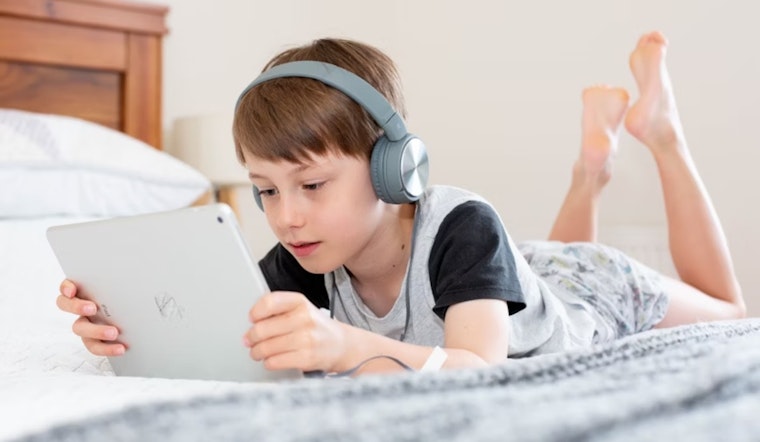
Turns out, loading up that tablet with educational apps and shows might actually be doing your kids some good, especially when it comes to reading. A study from the Ohio State University found that first graders who use more educational media are spending more time with their noses in books. The research, released in the Journal of Applied Developmental Psychology, suggests that these smart screens are not cutting into kids' reading time – in fact, it's quite the opposite.
The study by Rebecca Dore and her colleagues surveyed caregivers to see what kind of media the kids were consuming. On average, first graders are soaking in 2 1/2 hours of screen time per day, but the way they spend that time varies. Per the findings, some children's most-used media was 100% educational, while others were getting a big fat zero in that department. And it's not just about filling up the time; it's also about closing knowledge gaps, with the potential use of educational media as a support tool. "Kids are using, on average, 2 1/2 hours of media a day. And if we are seeing difficulties or disparities in some of these skills and knowledge that children are developing at this age, can we use educational media as a sort of prompt, or support, for those areas?" Dore told the Ohio State University news.
Interestingly enough, the study, which relied on caregiver input through questionnaires, pinpointed that PBS is the big player here, providing over 45% of the educational content that those Ohio first graders were glued to. The researchers saw value in the way educational elements are seamlessly woven into the storylines of PBS programs, making them more engaging and effective than standard lecture-style content.
This all comes as a relief to parents fretting over the impacts of screen time. Although it's a balancing act, with the 'right amount' of media differing for every child's needs and home environment, this could lighten their worries a shade. Girls, in particular, seemed to be getting more out of this educational media, turning toward the relationship-focused content that often features in educational programs. "Girls used more educational media than boys," Dore said to the Ohio State University news, a reflection possibly of different content preferences between genders.



