

























































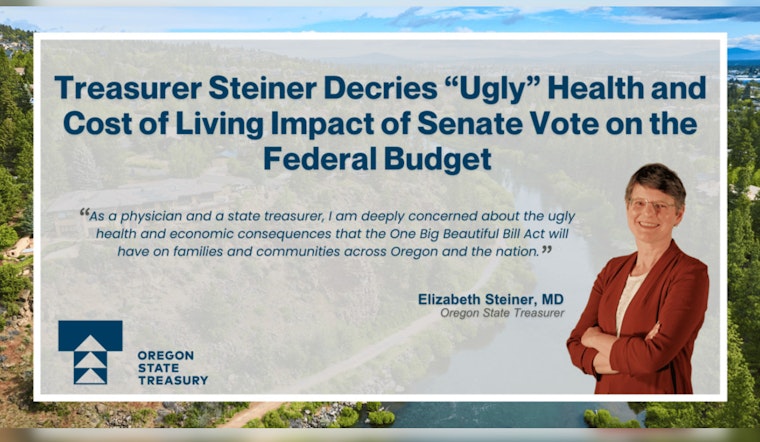
Oregon State Treasurer, Elizabeth Steiner, MD, has vehemently opposed the passage of the latest federal budget by the US Senate, a piece of legislation that proponents have optimistically dubbed the One Big Beautiful Bill Act. According to a statement released by her office, Steiner, who also brings a background in medicine to bear on budget discussions, criticizes the proposed austerity measures poised to shave more than $1 trillion from Medicaid and Food Stamps nationally over the coming decade.
For Oregonians, these cuts could translate into a $1 billion reduction in Medicaid funds, which not only diminishes the level of public health services available but also endangers the health coverage of over 500,000 state residents. Steiner points out the stark consequences on the Oregon State Treasury website: "As a physician and a state treasurer, I am deeply concerned about the ugly health and economic consequences that the One Big Beautiful Bill Act will have on families and communities across Oregon and the nation." Her words encapsulate a growing fear that slashing such significant healthcare funding would intensify the financial strain on households already grappling with the rising costs of living.
The One Big Beautiful Bill Act also aims to remove over $300 billion from Affordable Care Act tax credits, an action predicted to inflate medical insurance premiums by substantial margins. The hikes range significantly, with some estimates increasing premiums by $400 to a staggering $3,000 annually. Beyond individual households, Steiner warns of broader economic repercussions. She anticipates such measures will lead to the closure of hospitals and clinics, eliminate jobs,and especially hit hard the rural communities of Oregon. Moreover the predicted increase of the federal deficit by $3 trillion could raise interest rates, thus dampening the credit availability that businesses rely upon to expand and innovate.
In the face of such momentous fiscal contraction, the Oregon treasurer does not mince words about the societal ripple effects. "They will push more people into debt and financial instability," she asserts on the Oregon State Treasury website, forecasting a grim future for many if such cuts proceed unchecked. These austere adjustments to the federal budget strike at the heart of communities, threatening to upend the lives of countless individuals who reside in the precarious balance between sustenance and insolvency. Undoubtedly, the tremors of this policy shift will be felt far beyond the legislative chambers where such decisions are made.
As this contentious bill now heads to the House for approval, Steiner makes a direct plea to those with the power to halt its advance, urging a definitive "no" on a policy she sees as a bald reallocation of resources to the already wealthy. She cautions against the further impoverishment of working and middle-class families, who would bear the weight of heightened food and health care costs under this legislative act. The emotions roiling beneath her discourse point to a fundamental schism in how public funds should be allocated – and for whose benefit.




