

























































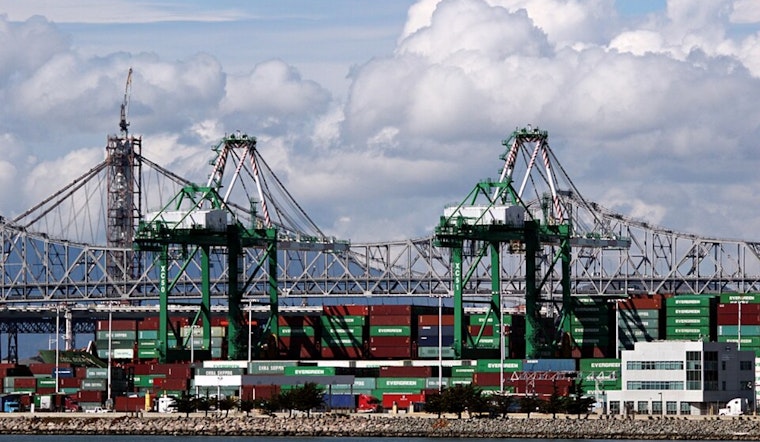
The Port of Oakland has reported a decrease in container volume for June, underlining adjustments in the logistics industry and an uncertain tariff landscape impacting shippers and carriers. Figures released by the Port suggest that the handling of twenty-foot containers, known as TEUs, fell to 168,460, a drop from the previous month and the same period last year. According to a report on the Port of Oakland's website, this represents a 10.1% and 12.8% reduction compared to May and June 2024, respectively.
In a stark counter to seasonal trends, Maritime Director Bryan Brandes at the Port explained the decline as "not a seasonal dip, but a market recalibration," inadvertently hinting at broader economic signals. Brandes elaborated on the shifting behaviors of importers and exporters, stating, "Importers and exporters are adjusting their supply chain timing and routing decisions in response to evolving conditions," as found in a statement on the Port of Oakland's site.
Even against the backdrop of June's downward trend, container volume year-to-date tells a slightly different story, having inched up by 0.6% from last year. Loaded imports saw a minuscule rise of 1.5%, which was offset by loaded exports, which declined by 1.3%. The detailed numbers for loaded imports reveal a more pronounced dip with 70,334 TEUs, an 11.3% and 16.3% fall from May and June the previous year, respectively. Tariff instability and tempering in consumer demand have importers scrambling to adjust their trade flows.
Export figures painted a similar picture of decline, with loaded exports reaching 59,593 TEUs. According to Bryan Brandes, such a decrease, which is 11.5% down from May and 10.3% lower than June 2024, suggests carriers continue to grapple with a languid global market. The number of empty import containers showed a negligible uptick; however, on the flip side, empty exports sagged 13.1%, marking a clear reduction in container shipping efficiency.
Carrier and shipper strategies are evidenced in the number of vessel calls, which dropped to 77 from 86 this last June and 87 in May. Nonetheless, the average number of TEUs per vessel managed a slight increase of 1.6% over May, an indicator of continued freight consolidation across fewer sailings and an industry-wide approach favoring full ships over frequent trips. Such moves reflect a cautious and reactive stance to the uncertain pulse of global trade.




.JPG)