

























































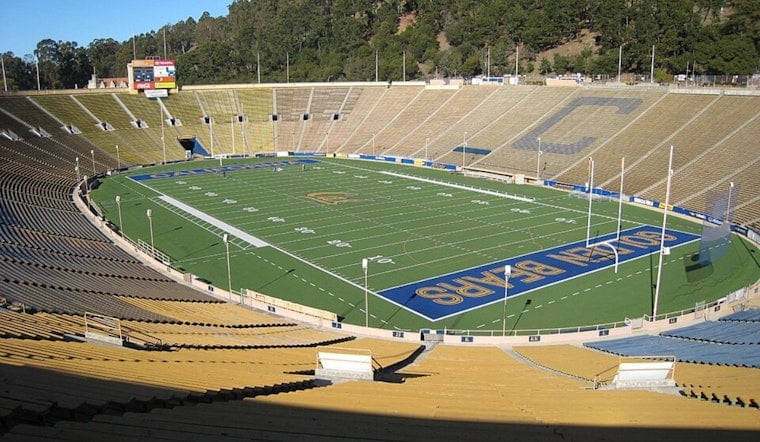
Cal Athletics is closing in on booking the first major concert at Memorial Stadium in 36 years, though the performer's name is still under wraps and the deal isn't finalized. The stadium hasn't hosted a marquee touring act since Paul McCartney sold out two shows there in the spring of 1990, and neighbors on Panoramic Hill worry the venue's return to the concert business could bring traffic gridlock, noise and safety risks to their fire-prone canyon.
According to the San Francisco Chronicle, athletic director Tosh Lupoi said Cal already has a concert scheduled on the books and that he's excited about it, even as university officials cautioned the booking isn't a done deal. Cal's Jonathan Okanes said the department is exploring concerts as a creative new revenue stream. The push follows a smaller test run this spring, when Cal's spring football game was followed by a postgame concert featuring 1 Umbrella and Rexx Life Raj.
Panoramic Hill Neighbors Recall Shaking Houses
Janice Thomas, a vice president of the Panoramic Hill Association who has lived near the stadium since 1985, told the Chronicle that her house shook when McCartney played there in 1990. She called Cal's renewed concert push profoundly mistaken and bad planning, citing unresolved questions about evacuation routes, traffic and noise. Association leaders first learned of Cal's plan during a January meeting with athletic department officials, then met again in June with Marc Fisher, the university's vice chancellor for administration, the paper reported.
A 2010 Settlement That Just Expired
The current standoff traces back to a lawsuit the Panoramic Hill Association filed against Cal in 2006 over large-crowd events at the stadium. The association lost at trial but dropped its appeal after reaching a settlement, and under that April 2010 agreement, detailed by Berkeley News, Cal agreed to ban amplified concerts and NFL games at Memorial Stadium while capping non-football events over 10,000 spectators to nine every three years. That settlement, which also required noise monitoring and an emergency vehicle stationed on the neighborhood's Oakland side during large events, expired this past January.
Living With Berkeley's Highest Fire Risk
Panoramic Hill's roughly 1,000 residents already live in Berkeley's highest wildfire risk category. The City of Berkeley's 2024 Local Hazard Mitigation Plan classifies the neighborhood as Fire Zone 3, its highest wildland-urban interface designation, and notes that residents rely on the narrow, winding Panoramic Way as their only way in or out. That road runs directly alongside Memorial Stadium, leaving little room for emergency vehicles during a packed event.
Cal Athletics Is Bleeding Money
Cal's financial squeeze helps explain the urgency. The athletic department's spending exceeded $165 million in the 2024-25 fiscal year, and a debt load that Athletic Business traces to the stadium's $321 million-plus seismic retrofit, completed in 2012, contributed to a $24.3 million operating deficit. Even so, Cal set a department record with $88.5 million in donations for the 2025-26 fiscal year and signed a multiyear jersey patch sponsorship with the AI company Dialpad, calling it the largest corporate partnership in school history, according to the Chronicle.
Cal Athletics is also cutting costs. Sports Illustrated reported that the department plans to eliminate up to 25 marketing, communications and creative-services positions by June 2026 as part of a broader restructuring. Cal also created an external venture, Strawberry Creek Studios, to overhaul how the department generates outside revenue.
Stadiums Everywhere Are Cashing In On Concerts
Cal isn't alone in eyeing concert revenue. College football venues nationwide hosted record-breaking concert crowds in 2024 and 2025, according to Pollstar News, which reported that country singer Zach Bryan drew 112,408 fans to Michigan Stadium in September 2025 — the largest ticketed standalone concert crowd in U.S. history, surpassing George Strait's 110,905 fans at Texas A&M's Kyle Field in June 2024. Nearby Stanford Stadium got in on the trend too, hosting two sold-out Coldplay shows in 2025 that drew roughly 90,000 fans combined, per SF Bay Area Concerts. Stanford has since booked a multi-night run for K-pop group BTS in May 2026, according to ABC7 News.
Stanford's own athletic department could owe up to $21.3 million in athlete revenue sharing for the upcoming academic year, the Chronicle reported, underscoring why campuses nationwide are hunting for new income. Under the House v. NCAA settlement that took effect for the 2025-26 academic year, Sports Illustrated reported that Division I programs can now pay athletes directly through a revenue-sharing cap of about $20.5 million, rising to $21.5 million in 2026-27.
UC System Aid Offers Only Temporary Relief
The University of California system has stepped in with stopgap funding. The UC Board of Regents voted in May 2024 to require UCLA to pay Cal $10 million annually through 2027 — dubbed "Calimony" — to offset media-rights losses after UCLA left the Pac-12 for the Big Ten, according to the Los Angeles Times. The UC Office of the President separately agreed to give Cal $45 million in "bridge" financing, paid in $15 million installments from 2024 through 2027, while Cal receives just 30% of full media distributions in its early years in the ACC, per The Mercury News.
The Last Time Memorial Stadium Hosted a Concert
The stadium's last brush with major touring acts came on March 31 and April 1, 1990, when Paul McCartney played two sold-out shows there during his world tour, according to Discogs. The shows drew capacity crowds totaling more than 118,000 spectators and grossed roughly $3.55 million, per Billboard's 1991 report — figures that made the McCartney dates the last major commercial concerts at Memorial Stadium before the neighborhood's legal fight shut the venue to amplified music for the next 16 years.
Whether Cal ultimately lands the show remains unresolved — university officials have stressed that no deal is final, and the performer's identity hasn't been disclosed. For Thomas and her neighbors, that uncertainty is precisely the concern, since questions about evacuation planning, traffic and noise remain unanswered heading into the fall.





