

























































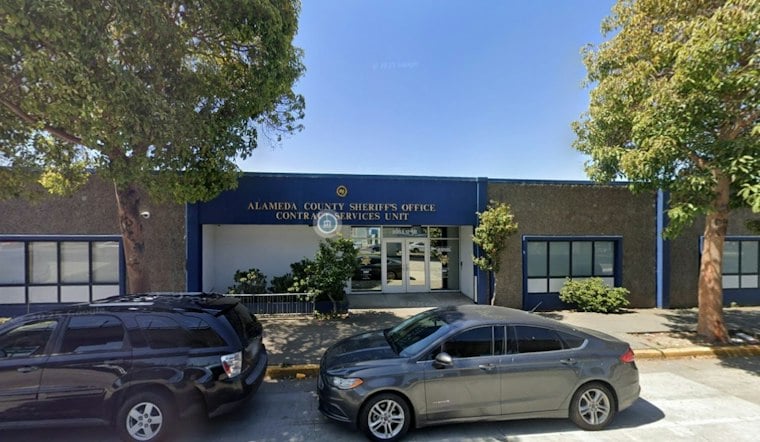
Alameda County's Sheriff's Office is deepening its partnership with Flock Safety through a Drone as First Responder program that sends drones to crimes and emergencies. The move builds on a program the Board of Supervisors first approved for unincorporated parts of the county, and it comes as similar drone deployments spread rapidly across California — and as privacy advocates grow louder about where the technology is headed.
From Rooftops to Docking Stations
The Sheriff's Office originally rolled out its Drone as First Responder program under a $600,000 first-year contract with Flock Safety covering six rooftop drones and software, according to the San Francisco Chronicle. That program was designed to send drones to crimes, fires and other incidents straight from rooftops, in some cases before deputies were even dispatched. Deputies at the sheriff's Real Time Information Center, a technology hub at the Eden Township Substation in San Leandro, monitor 911 calls and launch the drones, which are restricted to the unincorporated areas of the county under the agency's jurisdiction.
The Sheriff's Office says the drone program will enhance the tools available to its Real Time Information Center, aiming to speed emergency responses and provide real-time information to deputies in the field. The county's unincorporated area includes rural communities, and the sheriff has described the department as short-staffed.
A Contract That Keeps Growing
The docking-station expansion follows a broader pattern of growth in the county's relationship with Flock Safety. In 2026, the Board of Supervisors approved a one-year, $2.4 million extension of its Flock Safety contract in a 3-2 vote, according to the Mercury News. That extension, which runs through June 30, 2027, covers Flock's automatic license plate readers, AeroDome drones, the company's operating system and its data network. The county has maintained a rolling contract with Flock Safety since July 2023, the outlet reported.
The Sheriff's Office has cited concrete results to justify the spending. Flock's license-plate readers tracked five stolen county vehicles and helped deputies locate them within 12 hours, per the same report. But the extension arrived alongside a less flattering disclosure: an internal Sheriff's Office audit found 140 unauthorized instances in which two out-of-state agencies accessed Alameda County's Flock Safety data over the preceding year. In response, the department has been preparing a competitive bidding process for a replacement surveillance company, a process officials said could take 12 to 18 months to complete.
What Happens to the Data
Alameda County's agreement retains license-plate-reader data for 365 days, according to The Oaklandside. Drone footage is treated differently: the Sheriff's Office requires that data be deleted from county servers within 60 days unless it is tied to a criminal or internal affairs investigation. The Sheriff's Office has said its drone policy commits the department to responsible use of the technology and respect for residents’ rights, according to the San Francisco Chronicle.
Privacy advocate Brian Hofer has raised concerns about surveillance drones. Debate over the technology has also included concerns about warrantless searches of private property.
A Regional Pattern of Rapid Growth
Alameda County is far from alone. The Bay Area has increasingly adopted drones as a public safety tool over the past five years, with Fremont's police and fire departments launching the nation's first joint Drone as First Responder program in 2024 after two years of pilot testing. San Francisco launched its own Drone as First Responder program in 2024.
Statewide, nearly 60 law enforcement agencies use drone programs, according to the Los Angeles Police Department, as reported by KPBS. Not every expansion has gone smoothly. In Sonoma County, the American Civil Liberties Union sued over drone use for code enforcement at residents' homes without a warrant, after Permit Sonoma said the drones were meant to target unpermitted cannabis grows in hard-to-access rural areas. The ACLU of Northern California described the program as a spying operation lacking accountability that violated residents' privacy and led to excessive fines. Sonoma County settled the lawsuit in September 2026, agreeing to stop warrantless or nonconsensual drone surveillance of residents' homes and to adopt new regulations governing drone use.
Fixed automatic license plate readers capture passing vehicles, while aerial surveillance drones are deployed to incidents. Flock Safety's footprint nationally includes at least 90,000 cameras scanning more than 20 billion license plates per month, according to KQED, a scale that has fueled broader scrutiny of how local governments across the state are expanding their contracts with the company, including a $3.15 million Flock expansion in Stockton and a $682,900 Drone as First Responder initiative in Santa Ana.





