

























































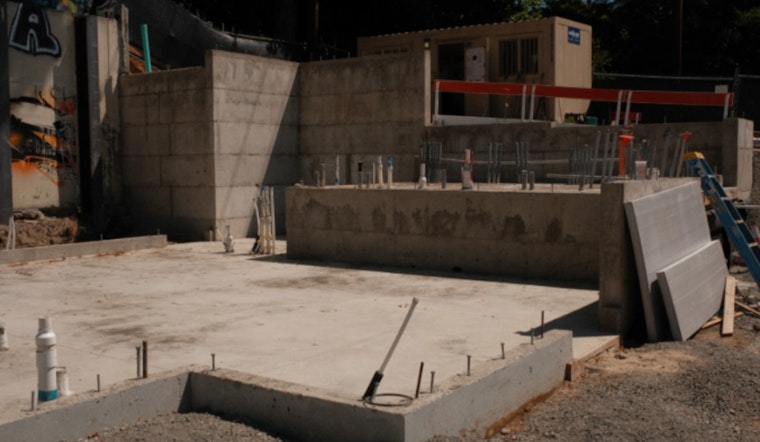
In Portland’s Buckman neighborhood, there's a development brewing that's targeting a specific group of city dwellers. Shortstack Belmont, a multi-family dwelling of 35 units, aims to serve those who fall into Oregon's "missing middle" -- people who earn a bit too much for standard housing subsidies but can't keep up with ballooning market rents. A joint venture between HomeWork Development's Jessy Ledesma and Sister City’s Anna Mackay, Shortstack is quickly becoming a template for affordable, sustainable living in the city.
Strategically located within walking's reach of schools, transit, and stores, Shortstack Belmont is the duo’s third project and it's playing a significant role in easing the housing squeeze for Portland’s essential workers and their families by offering reasonably priced two- and three-bedroom units. According to a report by OHCS, these apartments are aimed at households making 60-80% of the area's median income.
The development has benefitted substantially from a $6 million kick from the Oregon Housing and Community Services (OHCS) through their LIFT program, which got a revamp with the new ORCA process. "As a developer who has worked through years of OHCS funding cycles, I really appreciate the updated ORCA process," Ledesma shared in an interview obtained by OHCS.
Mackay, too, praises the ORCA for being a clear and flexible system that helps juggle the demanding task of project realization. "We know the funds are limited, and the need is great," Mackay told OHCS, drawing attention to OHCS’s effort to, make the fund distribution as equitable as possible.
Besides providing much-needed housing, Shortstack Belmont is also carving a niche with its use of sustainable materials, employing mass timber sourced locally and engaging COBID-certified contractors and consultants for a majority of its construction needs. They've also reached out through NAMC-Oregon to bring minority contractors into the fold, educating them about opportunities in what's shaping up to be a growing sector in construction. The project does, however, face its own share of obstacles such as navigating permits and the ever-present specter of rising operational costs.
Once Shortstack Belmont crosses the finish line, set for mid-2026, it will have contributed 108 units of moderate-income housing to Portland’s inventory. But the real value may lie in its model – a sustainable housing framework that could potentially redefine development in Oregon and beyond.


