

























































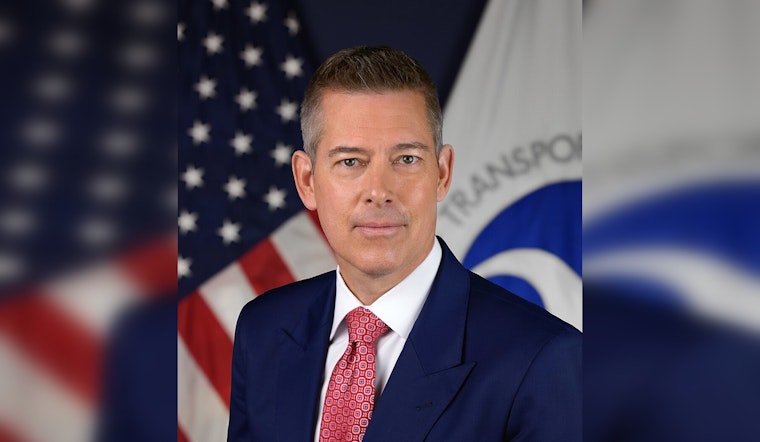
U.S. Transportation Secretary Sean P. Duffy announced plans to enforce stricter safety guidelines for wind turbine construction near railways and highways, citing previously dismissed engineers' concerns over potential radio frequency interference, according to a Department of Transportation release. Duffy's criticism targets the Biden-Buttigieg administration for prioritizing environmental agendas over public safety and immediately implements a recommended 1.2-mile setback for new turbine installations near critical transport infrastructures to avoid communication disruptions.
Duffy, claiming to rectify what he perceives as the previous administration's misuse of funds, pointed out that over $80 billion were invested in Diversity, Equity, Inclusion (DEI) programs and the Green New Deal while "safety was ignored," the announcement also shed light on particular instances where the Biden-Buttigieg USDOT overlooked expert advice, which included one case of a wind farm proposal that they acknowledged could disrupt communication for trains but later withdrew their recommendation for a setback with no explanation despite it being within a "one-to-three-mile boundary... may be problematic for train communications in this area and present an undue risk."
This strict stance from Secretary Duffy's USDOT will entail a comprehensive review and a new study to solidify safety guidelines for future wind turbine construction, particularly focusing on protecting the radio spectrum frequencies vital for transportation safety systems. Duffy also calls on Congress to delve into this matter further, revealing that 33 projects had their initial safety recommendations disregarded under the previous administration.
As part of addressing safety, Secretary Duffy's USDOT, in cooperation with the Federal Aviation Administration (FAA), will evaluate wind turbine proposals more rigorously to guarantee they do not impose threats to aviation safety, including emerging aviation technologies like Advanced Air Mobility, the department's proactive approach also includes partnering with the National Telecommunications and Information Administration (NTIA) Interdepartment Radio Advisory Committee (IRAC) Frequency Assignment Subcommittee to provide expert feedback on turbine siting which would involve extensive assessments of potential risks and interference with critical transportation links that depend on radio frequency for safety.





