

























































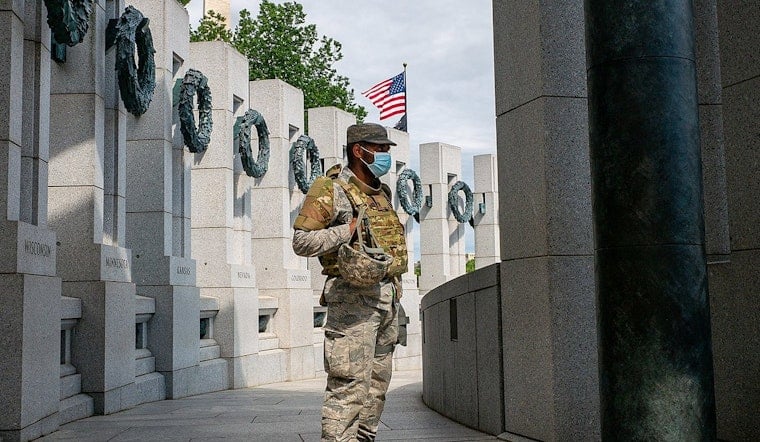
National Guard troops on the streets of Washington, D.C. have transitioned from a state of unarmed patrol to carrying weapons, as confirmed by a Pentagon spokesperson on Sunday. According to WGN-TV, Defense Secretary Pete Hegseth authorized this escalation last week, with the stipulation that force is a last-resort measure against "an imminent threat of death or serious bodily harm." The presence of armed troops comes in response to President Donald Trump's initiative to combat what he describes as a wave of crime in the nation's capital.
While the number of armed Guardsmen has not been specified, they will be equipped with either M17 pistols or M4 rifles, as detailed by officials who requested anonymity when speaking to Reuters. The Guard’s Joint Task Force-DC issued a statement, noting a firm commitment to safety and a restrained use of force, emphasizing that it will not be applied indiscriminately but only when faced with immediate threats.
As the city reflects on this military posture, President Trump attests to the effectiveness of his strategy, claiming without corroboration that crime in D.C. has been quelled by the deployment. Furthermore, he has hinted at plans to send troops to other cities with Democratic leadership, like Chicago and Baltimore, asserting his ability to improve law enforcement through federal intervention. However, Trump's authority to insert federal troops into cities is complicated by Title 10 of the U.S. Code, which governs such deployments and could prompt legal challenges.
Challenging Trump's assertion on the necessity of military presence, Democratic leaders argue against the characterization of their cities as crime-ridden emergencies. Representative Hakeem Jeffries remarked to Reuters that the President's moves are more about political theater than responding to actual crises. Indeed, official data points to a decrease in crime in both D.C. and Chicago, despite the President's claims. Mayors of these cities, alongside state governors, maintain that their urban centers are currently under no condition that would justify such federal intrusion.
With 2,274 National Guard troops in D.C., including contributions from several states, the sight of soldiers patrolling among civilians is a stark reminder of the political tug-of-war gripping the nation. President Trump continues to leverage his position, citing Section 12406 of the U.S. Code to justify these deployments, a maneuver he has employed before to address protests and other domestic concerns. Yet, the legality and effectiveness of such actions remain in question as local governments voice opposition and critics decry federal overreach.





