

























































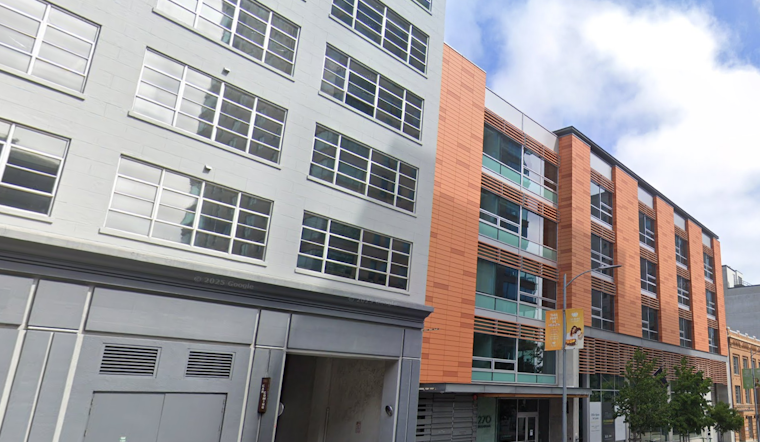
Fintech unicorn Brex has inked a massive 100,000-square-foot lease at 270 Brannan Street in SoMa, delivering a stunning reversal from the company's 2021 decision to ditch its physical headquarters for remote work. The move isn't just corporate whiplash—it's a calculated bet that San Francisco's stranglehold on AI innovation makes an in-person presence non-negotiable for serious players.
The lease represents a 67% expansion from Brex's previous 60,000-square-foot digs at 405 Howard Street, which the company abandoned in 2021, as reported by The Real Deal. Back then, co-founders Pedro Franceschi and Henrique Dubugras were singing the remote work gospel, even relocating themselves to LA (though Dubugras quietly moved to Palo Alto two years later—a tell-tale sign of where the action really is).
The AI Arms Race Demands Physical Presence
Brex's November move-in coincides with what insiders are calling the most significant office leasing activity since the pre-pandemic boom. AI companies have tripled their office footprint since 2016, according to CoStar, with the sector collectively gobbling up over 1.7 million square feet citywide. A Brex spokesperson didn't mince words about the strategic imperative: "As AI continues to take the tech scene by storm, it's imperative we have a strong presence in San Francisco."
The 270 Brannan building itself tells the story of where tech is heading. This isn't your grandfather's Financial District tower—it's a 2016 Pfau Long Architects creation that screams "we get it." The LEED Platinum-certified space spans 213,000 gross square feet across two structures connected by a landscaped courtyard with a show-stopping glass canopy, as detailed by SKS Partners. Think outdoor meeting spaces on every floor, 13-foot ceilings, operable windows, and a roof deck with killer Bay Bridge views—basically everything remote workers missed about office life, but better.
The Wunderkind Founders Circle Back
Franceschi and Dubugras know a thing or two about reading the room. These Brazilian wunderkinds met as teenagers through a Twitter spat, built and sold payments processor Pagar.me for $1.5 billion in transaction volume, then dropped out of Stanford to create Brex. By 22, they'd hit unicorn status with their corporate credit card platform that now serves 20,000+ businesses from DoorDash to Compass, as chronicled by TechCrunch. With $1.5 billion raised and 1,100 employees globally, they're betting big that physical proximity matters in the AI era.
Their timing aligns with Nvidia CEO Jensen Huang's recent declaration that San Francisco is experiencing an AI-powered renaissance. "It's because of AI that San Francisco is back," Huang said, noting the city is "thriving again" after the pandemic exodus, according to San Francisco News.
The Great RTO Reversal Accelerates
Brex's move mirrors a broader about-face among tech heavyweights who previously championed distributed work. Salesforce, the city's largest private employer, quietly started requiring some teams to work four to five days weekly despite CEO Marc Benioff's 2022 insistence that "office mandates are never going to work," as reported by The Standard. Coinbase dropped $25 million to break its lease in 2021, only to recently ink 150,000 square feet at Mission Rock.
What makes this wave different is the AI sector's particular obsession with in-person collaboration. About 20% of new office leases signed in 2024 went to AI tenants, according to CNBC, citing Colliers research. Harvey AI grabbed 92,000 square feet at 201 Third Street, Zip secured 75,000 square feet at 680 Folsom, and Y Combinator-backed startups are snapping up space faster than landlords can market it.
Market Dynamics Create Winners and Losers
The return-to-office surge comes as commercial real estate finally shows signs of bottoming out. Office vacancy rates peaked at 36.9% but declined for the first time in 19 quarters, according to The Standard. The result is a tale of two markets: premium spaces commanding up to $165 per square foot while commodity options go for as little as $30.
For smaller players, competition for quality space under 20,000 square feet has become cutthroat, with brokers warning that hesitation means losing out entirely. That dynamic favors deep-pocketed tenants like Brex, which can lock down substantial blocks in trophy buildings while smaller competitors scramble for scraps.
The question now isn't whether San Francisco's office market will recover—it's whether the city can accommodate the surge in demand from AI companies convinced that innovation requires face-to-face collaboration. For Brex, doubling down on SoMa real estate signals confidence that the AI boom is just getting started, and they intend to be in the room where it happens.





