

























































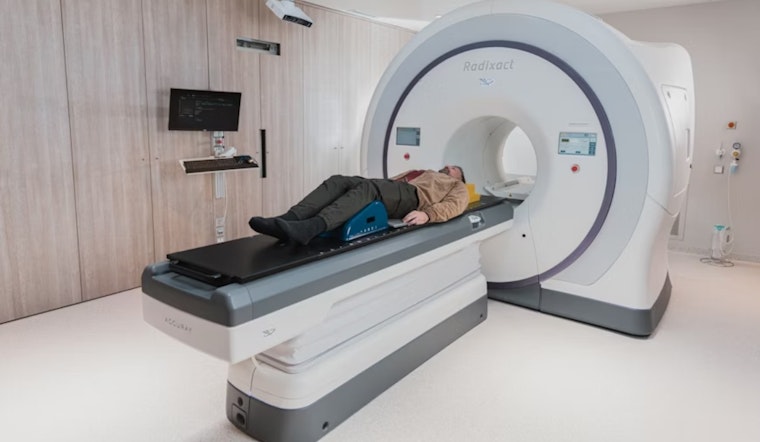
In what could be a significant breakthrough for cancer therapy, the University of Cincinnati Cancer Center, in collaboration with Varian, has announced the successful completion of a clinical trial that fully enrolled participants to evaluate Flash radiotherapy for painful bone metastases in the thoracic region. As reported by Yahoo Finance via UC News, this marks a pivotal moment for the potential standardization of a pioneering approach in radiation treatment.
The FAST-02 trial, which took place at Cincinnati Children’s Hospital/UC Medical Center Proton Therapy Center, saw 10 patients sign up to undergo a treatment method that aims to quickly target tumors while minimizing harm to nearby healthy tissues. Unlike conventional radiation therapy, which takes minutes, Flash therapy delivers treatment doses in under a second, a speed more than 100 times quicker. The University of Cincinnati Cancer Center’s trial worked to not only assess side effects but to also gauge just how effective the therapy is based on participants' reports of pain relief post-treatment.
Leaders of the trial, John Perentesis, MD, and Emily Daugherty, MD, emphasized the importance of this research in a field that is always searching for more precise and less detrimental treatment methods. "Completing treatments for FAST-02 is a pivotal and progressive step in our effort to establish the safety and effectiveness of Flash radiotherapy," Perentesis told the University of Cincinnati News. He elaborates on the notion that such advancements not merely evolve clinical practice but can transform patient care unequivocally.
The methodology behind Flash therapy has garnered attention due to its rapid application and its aim to more accurately attack tumors without adversely affecting the surrounding body. While FAST-02's immediate goal was to fully understand side effects and pain management, its larger objective stands to solidly place Flash therapy amid advanced clinical settings. With a similar prior Varian trial, FAST-01, having paved the initial path by evaluating workflow feasibility, FAST-02 seeks to unfold new possibilities in radiation oncology and, as Perentesis stated, "meaningfully improve patient outcomes."



