

























































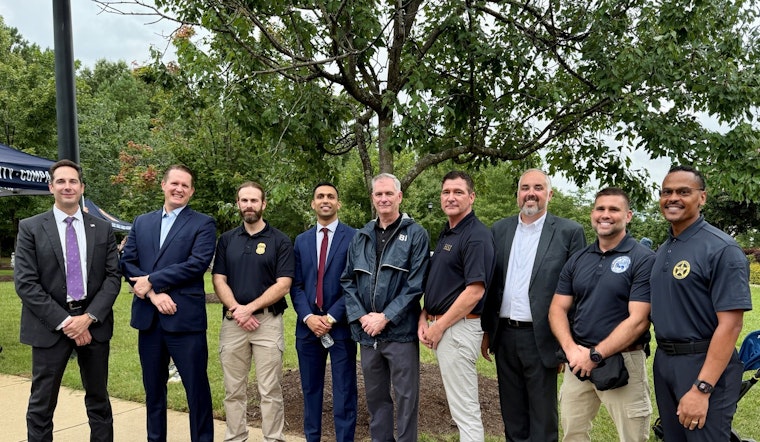
The U.S. Attorney’s Office for the Eastern District of North Carolina teamed up with various law enforcement agencies and local communities this past Tuesday to participate in the National Night Out events held across the state. The initiative, which underscores the importance of community partnerships in bolstering public safety, saw neighbors and law enforcement officers come together in a show of solidarity and camaraderie. According to a news release from the U.S. Attorney's Office, Acting U.S. Attorney Daniel Bubar expressed that it was "a privilege to join our federal, state, and local law enforcement partners as we visited neighborhoods across Raleigh, connected with residents, heard their feedback, and strengthened our ties with the community."
Determined to build lasting relationships with the citizens they're sworn to protect, local law enforcement introduced programs like "Cops on the Block" to foster closer ties with their communities. "For me, community engagement isn’t just part of the job—it’s a calling," Raleigh Police Chief Rico Boyce said in a statement during the event. “Events like this are about more than showing up; they’re about bridging gaps and building real relationships. That’s why we started Cops on the Block—to be more than a uniforms, more than badges. To be neighbors." Boyce's sentiments underscore the central theme of the night's events, aiming to turn law enforcement officers into fixtures within the neighborhoods they serve.
National Night Out is an annual campaign aiming to enhance the relationship between neighbors and law enforcement leading to safer communities. The event has grown significantly since its inception in 1984 and is funded by the Bureau of Justice Assistance of the U.S. Department of Justice. The program is overseen by the National Association of Town Watch, a non-profit organization that works nationwide.
Activities for National Night Out include a mix of block parties, cookouts, festivals, and various safety demonstrations all coordinated by local law enforcement with the help of trained volunteers. The shared objective is to send a message that communities are united in their efforts to keep their neighbors safe.





