

























































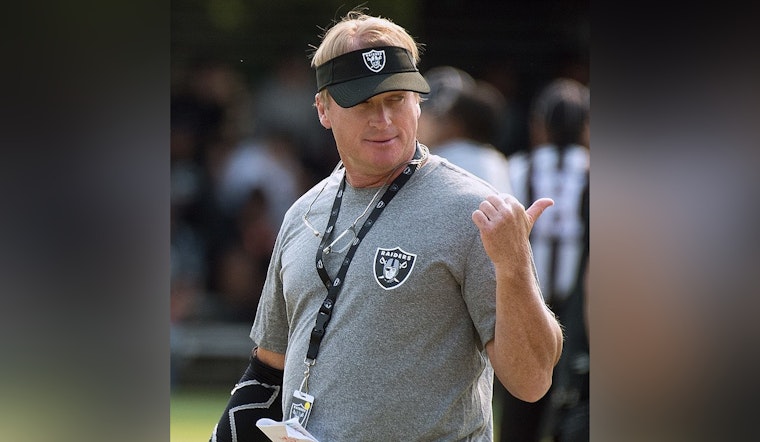
The Nevada Supreme Court has given former Las Vegas Raiders coach Jon Gruden a legal victory in his lawsuit against the National Football League. In a 5-2 decision, the court ruled that Gruden's case against the league and Commissioner Roger Goodell could proceed in a public courtroom, a move that could potentially expose more internal NFL dealings. According to News3LV, this decision counters the NFL's efforts to push the lawsuit into arbitration, a process that would have largely taken place in private.
Gruden's lawsuit stems from a series of leaked emails that prompted his resignation in October 2021, the content of which included racist, misogynistic, and homophobic remarks. The emails were revealed as part of a New York Times investigation, shedding light on derogatory language Gruden used while he was employed with ESPN. The coach resigned from the Raiders following the publicization of the emails, and he claims that the NFL forced him out, according to details reported by 8 News Now.
The recent ruling allows Gruden's lawsuit to avoid the arbitration clause that typically applies to current NFL employees, noted the justices. As a former employee, Gruden asserts that he is not subject to this clause, a point that has now received backing from the state's highest court. Moreover, the public lawsuit might unveil the origins and the purpose behind the leak of Gruden's private emails. The desire to keep this process public indicates the potential impact of the disclosure of further NFL communications.
Financially, Gruden's lawsuit highlights the significant losses he has faced since leaving the Raiders, including the remainder of his $100 million contract that was set to run through 2027, along with lucrative endorsement deals — a notable example being with Skechers. Gruden is also seeking damages for the harm done to his reputation and career prospects, as he has been largely absent from the professional football landscape following his resignation.
With this legal hurdle cleared, Gruden's legal team will now prepare to face the NFL in the district court, meaning the league may have to disclose more of its internal processes and communications.



