

























































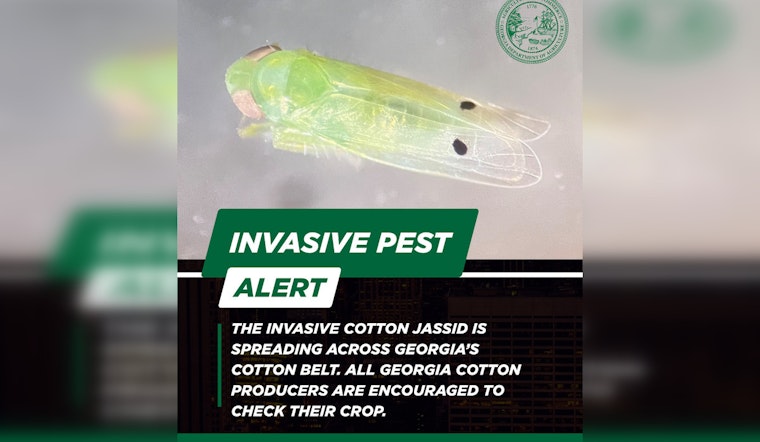
In a bid to swiftly respond to the spreading threat of the invasive Cotton Jassid, Georgia Agriculture Commissioner Tyler J Harper has sounded the alarm for cotton farmers across the state. Harper is actively encouraging vigilance among the agricultural community, as this tiny pest poses a significant risk to Georgia's cotton yields. Identified first in Seminole County just last month, the Cotton Jassid, also known as Amrasca biguttula, has been making an unwelcome march across the prime cotton-growing regions of Georgia, leaving worried farmers in its wake.
"We’re encouraging all Georgia cotton producers to check their crop to look for evidence of the cotton jassid, and if found, immediately contact your County Extension office," Harper advised, stressing the urgency of the situation. As reported by Georgia Department of Agriculture, the Georgia Department of Agriculture (GDA) and its Plant Protection Division aren't taking this threat lying down. They're closely collaborating with the University of Georgia Extension Service and the Georgia Cotton Commission, all of which are putting their heads together to stave off this pestilent problem.
The economic implications of an unchecked jassid population could be dire, with cotton serving as one of Georgia's top crops. This concern isn't just theoretical; the Cotton Jassid is known to feed on cotton leaves—disrupting the essential process of photosynthesis and causing a decline in the crop yield which farmers depend on. The collective effort is a testament to the seriousness with which this issue is being taken by the state's agricultural authorities.
Experts from the University of Georgia are currently knee-deep in on-farm trials, striving to develop effective management strategies that can help save the crop from ruin. "I'm hopeful Extension Entomologists will soon have effective treatment strategies for Georgia cotton producers to protect their crop," said Harper, indicating that recommendations on how to best deal with the jassids are still in the making, according to the Georgia Department of Agriculture. It's clear that as the situation develops, the state's response is being carefully crafted, tailored to combat the spread of this damaging insect.


