

























































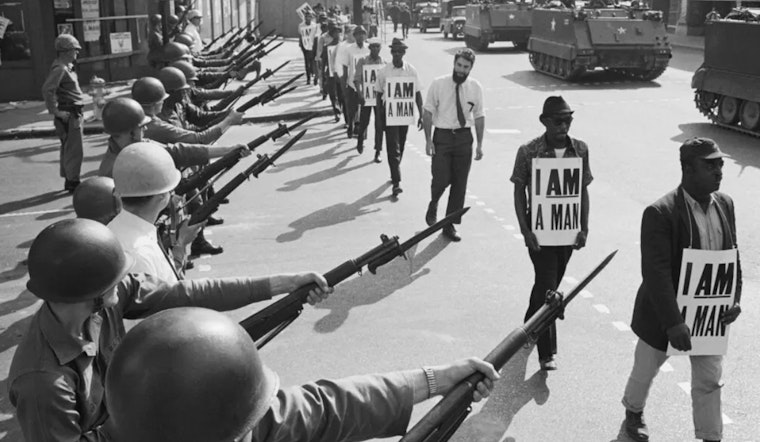
The Branigan Cultural Center is set to host a poignant exhibit that captures the heart of the Civil Rights Movement between 1960 and 1970. Entitled "I AM A MAN: Photographs of the Civil Rights Movement, 1960–1970," the collection showcases a decade that saw the dismantling of segregation and the affirmation of voting rights for African Americans. Making its way to the public on September 2, the exhibit will remain on display until October 18 at the Shannon Room.
The gallery endeavors not merely to showcase history, but to immerse its audience in the atmosphere of change that was rife in the South during that era. The photos, sourced from an array of individuals including local activists, news photographers, and some internationally recognized talents, were put together by Southern folklorist William Ferris and his team. They reveal the protests, the sit-ins at segregated lunch counters, and the determined faces behind the "I Am a Man" placards. Amidst its educational intent, the exhibition also seeks to offer a visceral reminder of that turbulent time of transformation.
According to the City of Las Cruces, the collection includes many photographs that have seldom been on public display. This unveiling of unseen moments from the Civil Rights Movement provides a unique opportunity for deeper insight into the social dynamics of the period.
Funded originally by the City of Montpellier for a French audience, the exhibit was curated by William Ferris for the Center for the Study of the American South at the University of North Carolina at Chapel Hill. The transatlantic journey of these snapshots of history, from Montpellier’s Pavillon Populaire to the Branigan Cultural Center, reflects a universal appeal and the continuous relevance of the Civil Rights Movement. The gallery aims to engage and educate even as it seeks to highlight a narrative of hope and resilience.
Located at 501 N. Main Street, the Branigan Cultural Center operates from 10 a.m. to 4:30 p.m., Tuesday through Friday, and 9 a.m. to 4:30 p.m. on Saturdays. Offering free admission and accessible through RoadRUNNER Transit Route 1 Stop 1, the center makes cultural education accessible to all.





