

























































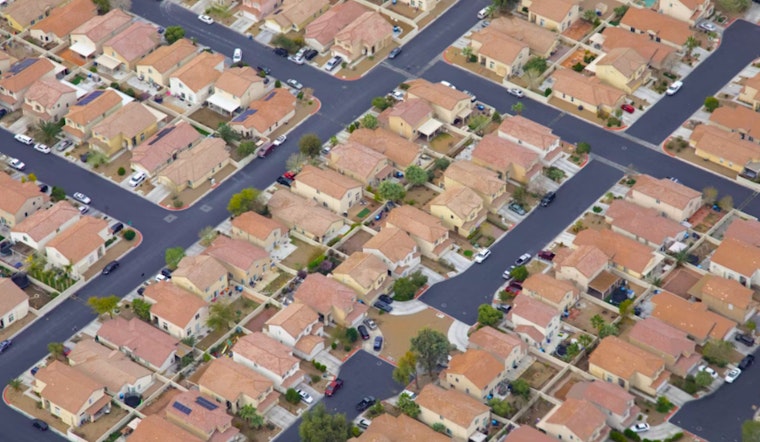
Las Vegas housing market is defying conventional wisdom this summer, with median home prices reaching record highs even as inventory floods the market. The median price for existing single-family homes in Southern Nevada hit $485,000 in July, matching the record high set earlier this year and representing a modest 1% increase from July 2024, according to VEGAS INC.
What makes this particularly striking is the dramatic surge in available homes. Single-family home inventory has risen 54% compared to last year, while condo and townhome listings have jumped 77%, as reported by VEGAS INC. By July's end, nearly 10,000 homes sat on the market without offers—a stark contrast to the tight inventory conditions that have defined recent years.
Market Paradox Challenges Traditional Theory
This dynamic confounds traditional real estate principles, where increased supply typically creates downward pressure on prices. "The biggest headline coming out of our housing market this year has been our increasing inventory," George Kypreos, president of Las Vegas Realtors, told VEGAS INC. By the end of July, 7,147 single-family homes were listed for sale without offers, alongside 2,622 condos and townhomes.
The sales pace in July amounted to close to a four-month housing supply, compared to just over a two-month supply at the same time last year. Buyers picked up 2,021 single-family houses last month, down 5.8% from July of last year, according to data reported by the Las Vegas Review-Journal.
Shifting Market Dynamics
The abundance of choices has shifted negotiating power toward buyers, who now have more options and time to make decisions. About 27% of listings had price cuts, approximately 6 percentage points above the national average, creating a more buyer-friendly environment than Las Vegas has seen in recent years.
The condo and townhome segment is showing more price sensitivity than single-family homes. The median price for condos and townhomes was $290,000 in July, down 2% from the previous year and well below the segment's record high of $315,000 set in October 2024, according to VEGAS INC.
National Leadership in Inventory Growth
Las Vegas isn't just experiencing inventory growth—it's leading the nation in this trend. The Las Vegas Valley leads the country in year-over-year increases in new home listings, with active listings up 77.6% in June compared to the same time last year, topping all 50 largest metro regions.
Several factors unique to Las Vegas help explain why prices remain elevated despite the inventory surge. High mortgage rates have pushed potential buyers to the sidelines while also locking current homeowners into low pandemic-era rates. Limited new home construction due to extensive federally controlled land in the valley, combined with ongoing population growth and a burgeoning luxury real estate sector, continues to support elevated prices.
Mixed Expert Forecasts
Industry analysts offer varying perspectives on the market's direction. Moody's chief economist Mark Zandi projects that home prices "have gone sideways and are set to fall," as reported by St. George Utah. However, a housing market crash in Las Vegas seems unlikely for 2025, with forecasts pointing toward a moderate adjustment rather than a sharp downturn, according to Norada Real Estate.
The persistence of record-high prices amid surging inventory suggests underlying strength in demand fundamentals. Despite increased supply and decreased demand—conditions that would typically create downward pricing pressure—home values remain at or near record levels, signaling ongoing market resilience supported by limited new construction, strong in-migration, and long-term economic developments, as noted by Rice Las Vegas.
As the market moves into the traditionally slower fall season, buyers find themselves in an increasingly advantageous position while sellers must adapt to properties potentially sitting on the market longer. Whether Las Vegas's unique combination of growth drivers can continue providing a floor for home values remains the key question facing the market.



