

























































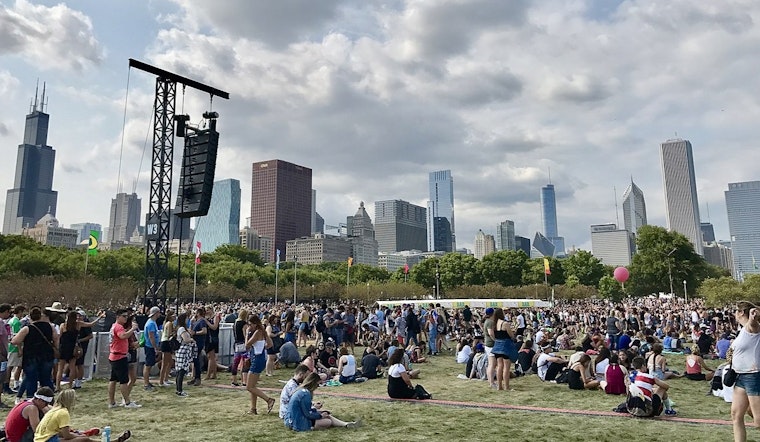
As Chicago's iconic Lollapalooza music festival kicked off its first day in Grant Park, the excitement was palpable among attendees ready to dive into a weekend of live music. Festivalgoers, as reported by NBC Chicago, spared no expense in their pilgrimage, with some traveling from states like Louisiana and Michigan. Cost proved to be a non-issue for many, as general admission tickets were snapped up at $189, and the platinum experience commanded over $2,000. "So excited! We literally got these tickets for Tyler, The Creator because he cancelled last year so we’re trying to make our way up there right now," Amari Jones from Michigan told NBC Chicago.
On the musical front, headliners Tyler, The Creator and Luke Combs were set to rock the crowd later in the evening. Earlier in the day, maintenance crews made a dash to ensure performing areas were ready, spreading mulch across slightly muddy fields near the Lakeshore and T-Mobile stages. Attendees were keen to position themselves strategically, with some lining up hours in advance for their favorite acts, according to the Chicago Sun-Times.
The festival boasted over 170 artists, showcasing not just the magnitude of Lollapalooza but also the diversity of its lineup. Local talent was well represented, with Chicago bands like The Symposium and Ratboys gracing the stages. Meanwhile, Gracie Abrams delivered what might just be termed a historically mesmerizing performance. "Holy sh--!" she exclaimed, responding to the formidable crowd gathered to hear her play, as noted by the Chicago Sun-Times. Robyn’s surprise appearance during her set for a "Dancing On My Own" duet ensured an electric atmosphere that underscored the event's penchant for unexpected moments.
A particularly emotive performance by Sierra Ferrell blended Americana and Appalachian traditions with a touch of psychedelia, questioning the status quo and celebrating individuality. “Everyone deserves to be seen, no matter what you are, who you are or what your walk of life is,” Ferrell told the Chicago Sun-Times in a moment of warm intimacy that transcended the festival's bombastic exterior.
Adding to the day's eclectic musical fare was Barry Can’t Swim, real name Joshua Mainnie, whose electronic beats infused with jazz and Afrobeat to effortlessly transitioned the festival vibe from day to night. Mainnie, a figure known to inject a human quality into electronic music, maintained a mostly stoic presence during his set, even as his audience danced feverishly before him. His story of transforming a poem into music exemplified the raw creativity fueling the festival's heart. "When you start this sh--, you don’t think it’s going to become your whole life!" Mainnie recalled in an interview with Rolling Stone UK, shared by the Chicago Sun-Times.





