

























































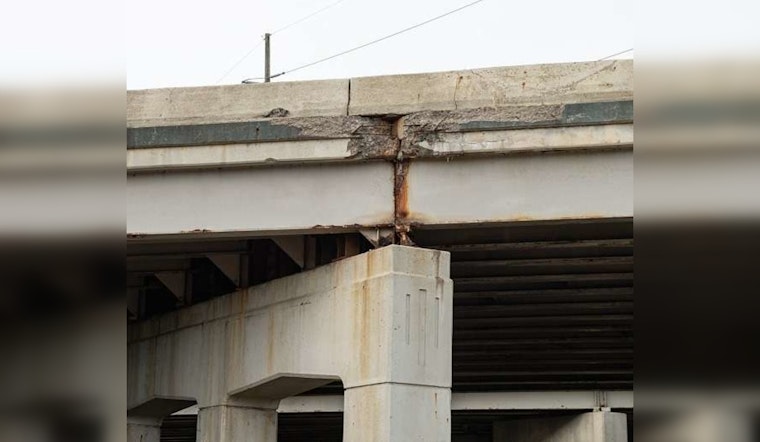
Michigan's infrastructure is ringing the proverbial alarm bell as state officials estimate an urgent need for funding that could reach into the hundreds of millions to repair and maintain bridges. As reported by CBS News, Rebecca Curtis, the chief bridge engineer for the Michigan Department of Transportation (MDOT), issued a stark warning: "We are looking at the potential for having to close bridges in the next 10 to 20 years unless we get additional funding." According to MDOT, about two-thirds of Michigan's bridges are living on borrowed time, already surpassing their original half-century design life.
Speaking of potential closures, more than 100 bridges could be shut down by 2035, disrupting the daily commute for nearly 2 million Michigan residents if a significant financial package doesn't come through. MDOT estimates, acquired by CBS News, the state requires an extra $400 million yearly for trunkline investments and an additional $200 million for local agency bridges.
A focal point of concern is the I-75/I-69 interchange in Genesee County, especially the critical northbound I-75 flyover ramp to westbound I-69. This particular structure carries a significant load – over 9,000 vehicles per day – and is already tagged as being in serious condition, said MDOT in a press release. Edgar Benning, CEO of the Flint Mass Transportation Authority, emphasized the interchange's importance to their operations, stating, "On a daily basis we go through there. We operate 400 vehicles in this community - all different sizes."
The aging epidemic of bridges isn't isolated to the I-75/I-69 interchange. Statewide, bridges are rapidly deteriorating. Rebecca Curtis shared the reasoning behind this in a Talking Michigan Transportation podcast, pointing out that the majority of the state's bridge inventory was built in the 1950s, with designs meant to last 50 to 60 years. But time has caught up, now needing a long-term solution to Michigan’s road-funding crisis, Curtis told the podcast. Otherwise, as per the Michigan Department of Labor and Economic Opportunity, entire industries and communities face job losses, economic decline, and long-term challenges, as mentioned in an MDOT statement.
With the Rebuilding Michigan program nearing its conclusion and the annual reconstruction budget facing significant reductions, the situation has become increasingly urgent. MDOT Director Bradley C. Wieferich projected concerning figures, warning that nearly half of the state’s routes could fall into poor condition by the end of the decade. This decline would not only affect 53 percent of overall traffic but also hinder the movement of 80 percent of commercial traffic, underscoring the critical need for substantial financial investment in Michigan’s transportation infrastructure.





