

























































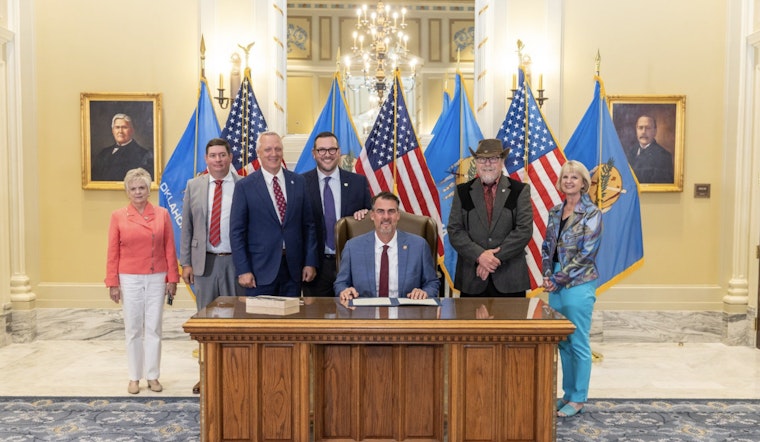
In a move aimed at redefining the relationship between the judiciary and administrative agencies in Oklahoma, Governor Kevin Stitt and Rep. Gerrid Kendrix, R-Altus, held a ceremonial signing for House Bill 2729. Authored by Kendrix, the legislation removes the application of Chevron deference—a legal principle that permitted agencies to interpret their own ambiguous regulations. "Ending the use of Chevron deference ensures that the rule of law, not the rule of regulators, governs in Oklahoma," Kendrix proclaimed, in a statement obtained by the Oklahoma House.
The traditional legal doctrine, set back in 1984 by the U.S. Supreme Court, mandated judicial deference toward agencies' rulings, thereby restricting courts from delving into legislative intent behind ambiguous administrative rules. This pivotal shift, which occurred after the legal test was upended in June 2024, now authorizes courts to independently interpret such rules. Administrative rules, which are regulations crafted by state agencies to enforce laws passed by Legislature, were under scrutiny as Kendrix addressed the complexities and potential pitfalls of their implementation. "Administrative rules are a slippery slope," Kendrix told the Oklahoma House, advocating for stronger legislative oversight and judicial authority.
In addition to HB 2729, three other administrative reform bills sponsored by Rep. Kendrix have been signed into law. House Bill 2728 enacts the 2025 Regulations from the Executive in Need of Scrutiny (REINS) Act, which strengthens procedural requirements for state agencies when implementing significant administrative rules. Senate Bill 995 and Senate Bill 1024 introduce new limitations on the rule-making authority of agencies, requiring legislative and gubernatorial approval before new rules can be adopted.
With HB2729 set to be effective starting November 1, the other reform measures took effect immediately once signed. The new laws reflect a pointed effort to recalibrate how agencies' rules are regulated and scrutinized, shifting significant interpretive power back to the judiciary. The impact analysis of proposed rules with notable fiscal implications, a task now assigned to the nonpartisan Legislative Office of Fiscal Transparency (LOFT), symbolizes a move towards increased transparency and accountability.





