

























































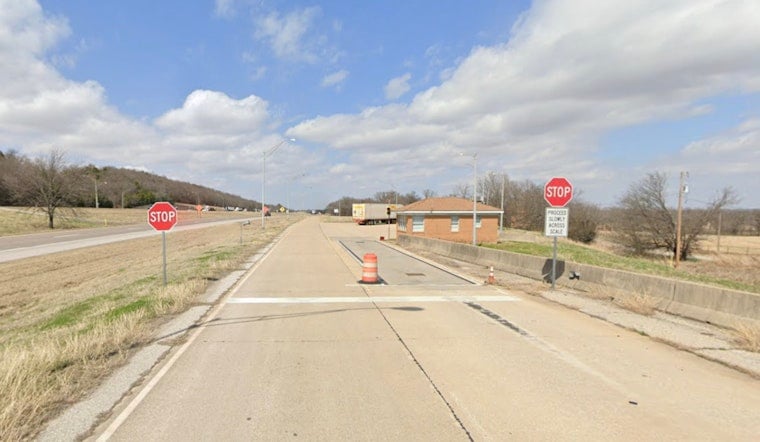
A weigh station on southbound I-35 near Davis, Oklahoma that has been checking trucks since 1967 is finally getting torn into the modern era. The Oklahoma Department of Transportation has partnered with Toronto-based Quarterhill Inc. on a $5.25 million technology package that will let commercial trucks get screened for weight, dimensions and compliance without ever slowing down for the scale.
The contract, announced July 30, covers Mainline and Ramp Sorter Systems, Weigh-In-Motion sensors, electronic screening, Tire Anomaly Classification Systems and automated dimensioning tools, according to a PR Newswire release detailing the deal. As The Journal Record first reported, the station currently forces truckers to stop for weight and compliance checks before merging back into traffic — a process the new gear is designed to eliminate for compliant carriers by scanning and weighing freight at highway speeds.
The Davis facility, located roughly 50 miles north of the Texas border, hasn't exactly kept pace with the times. It picked up a triple-platform hydraulic scale in March 2022 and fiber internet that June, per the outlet's reporting, but the core infrastructure still dates to the year it was built. The corridor it monitors now carries about 9,000 commercial vehicles a day, a number the paper reports is expected to climb to 12,000 within the next few years.
What the New Screening System Actually Does
Once operational, the electronic screening system will check license plates for compliance and flag numbers for law-enforcement review when it detects issues, functioning as what the Journal Record described as an interior checkpoint for catching noncompliant carriers before they reach inspection level. Donna Bergan, vice president of Quarterhill's Intelligent Transportation Systems division, told the paper the system helps inspectors make better decisions by giving them information before a truck even reaches inspection level.
Bergan drew a distinction between this technology and the license-plate readers already familiar to drivers, saying the Quarterhill system is different from Flock cameras and police plate readers, according to the same report. Quarterhill uses artificial intelligence largely as a background tool for vehicle classification and identification rather than as a public-facing enforcement mechanism, the company has said. The Tire Anomaly Classification piece of the package uses roadside sensors to catch flat, underinflated or mismatched tires at highway speeds, a capability Quarterhill has said elsewhere addresses a leading contributor to commercial vehicle breakdowns and highway debris, per the company's own research.
A Separate, Larger Construction Contract
Quarterhill's technology deal is only part of the picture. Oklahoma Department of Transportation records show the agency separately awarded a $6,754,649.37 construction contract to Ada-based C3 Construction, Inc. on March 2, 2026, to handle the physical roadwork and facility rebuild at the site, following a February 2026 bid opening under Call Order 223. Combined with Quarterhill's package, total investment at the Davis site tops $12 million.
ODOT will manage that roadwork, which includes repaving and closing one lane during construction, with the project expected to begin August 17 and finish in late February 2027. Officials cited safety and road preservation as the project's largest goals, according to the Journal Record's reporting, noting that automated screening should also reduce pavement damage caused by heavy trucks repeatedly stopping and starting in the same spot.
How Oversight Will Work After Reopening
Once the facility reopens, both the Oklahoma Corporation Commission and the Oklahoma Highway Patrol will monitor the compliance data the new system generates. That split reflects how commercial vehicle oversight is structured statewide: ODOT maintains the physical facilities, while Corporation Commission officers and state troopers handle vehicle inspections and enforcement, per the Oklahoma Corporation Commission. Oklahoma's Weigh Station Act also limits the Corporation Commission's roadside enforcement to a 7-mile radius around fixed stations, according to Justia Law.
Davis fits into a much longer pattern for the state. Oklahoma began replacing its legacy interior weigh stations back in 2008 under a $100 million initiative to build modern border Ports of Entry and virtual weigh stations, moving away from the basic static scales once housed in metal trailers, according to the Southwest Ledger. ODOT has also layered in virtual monitoring on secondary routes, including a station launched on U.S. 412 near the Arkansas border in September 2021 to catch trucks trying to bypass main checkpoints.
A Regional Trend in Freight Screening
Quarterhill's work in Oklahoma follows a similar deal the company struck with the Arkansas Department of Transportation in October 2025, a $2.7 million project deploying AI-driven Weigh-In-Motion and Tire Anomaly Classification technology along I-40 and I-55, according to the company's own announcement. Quarterhill, led by CEO Chuck Myers and publicly traded on the TSX under QTRH and OTCQX under QTRHF, holds similar commercial vehicle technology contracts in states including Illinois, Utah, Indiana, California, New Jersey and Massachusetts, per Investing.com.
The stretch of I-35 running through the state covers 235 miles from the Red River at the Texas border to the Kansas line, serving as Oklahoma's primary north-south freight corridor linking Oklahoma City to Texas and Midwestern hubs. With truck volumes projected to keep rising, ODOT's bet is that automated screening at Davis can keep compliant freight moving while giving inspectors and troopers a clearer, faster way to catch the trucks that aren't.





