

























































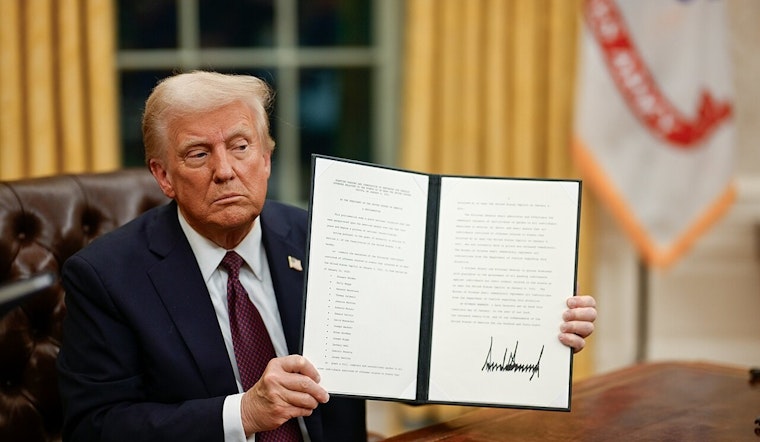
In a recent move by the Oval Office, the President of the United States has issued an executive order intended to tighten the reins on federal grantmaking. According to the White House statement, the goal is to ensure that every tax dollar spent by the government serves to improve American lives or advance American interests, a target that has reportedly been missed in the past with grants funding a range of projects from drag shows in Ecuador to the development of AI tools for social media censorship.
The president’s mandate, characterized by a call for enhanced scrutiny, stipulates a comprehensive review process for funding opportunities by senior appointees. It draws attention to instances where federal grants have gone to what the administration deems as ideologies contrary to American values, such as Marxism, and positions critical of the United States' global presence. The order also casts a critical eye on spending for indirect costs, including university facilities and administrative overhead, suggesting a larger portion should go directly to research projects and their applicants.
Special emphasis is placed on so-called "Gold Standard Science," with the expectation that funded research should be reproducible and meet specific benchmarks. Implementation of new review processes is expected to prioritize agency priorities and national interest, per the executive order. Concerns about a laboratory in Wuhan engaged in gain-of-function research, and grants that seemingly facilitate illegal immigration or threaten public safety, were examples cited by the administration in its call for reform.
The order further introduces a consideration for discretionary awards, insisting that these do not fund or promote activities which may contravene current administration policies or American values, as defined by the executive. This includes, but is not limited to, racial preferences, denial of the sex binary, or the assistance to illegal immigrants. Moreover, the administration voices concern about the complex nature of the grant application process, which appears skewed to favor applicants with access to legal and technical expertise, rather than merit.
In terms of implementation, the published plan dictates that no new grants can be announced until the new review process is established, except when legally required otherwise. This includes a clause allowing for immediate termination if a project no longer aligns with agency or national interests. These sweeping changes signify a significant redirection in federal grantmaking procedure, with ripple effects anticipated throughout the research and non-profit sectors, both of which are traditionally heavy beneficiaries of such funding.



.jpg)