

























































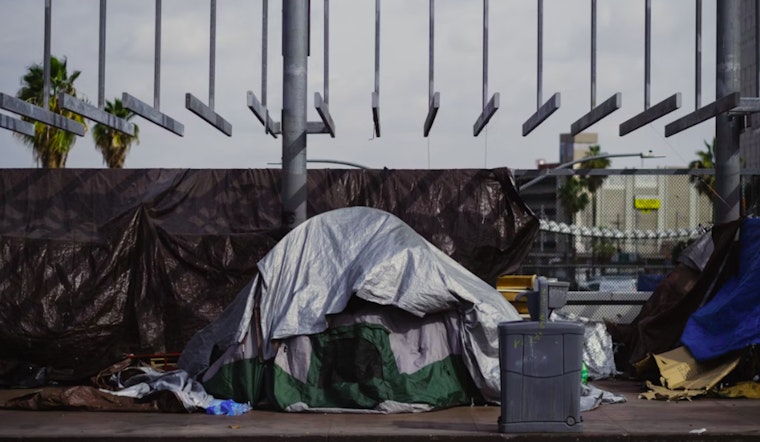
Sacramento County's decision to halt water deliveries to homeless encampments in late June has created a crisis for hundreds of people living without shelter during one of the region's most scorching summers. The county ended deliveries to 40 encampments just as temperatures soared past 100 degrees, leaving vulnerable residents scrambling for one of life's most basic necessities.
According to ABC10, Sacramento County said water deliveries were always going to end because they were funded by American Rescue Plan dollars that no longer exist. The funds were part of a contract with SANE to distribute drinking water to encampments during the COVID-19 public health crisis over the last four years.
Timing Raises Concerns
Advocate Crystal Sanchez from the Homeless Union told ABC10 they received a letter on June 26 that water was stopping to 40 encampments on June 30. The timing during a historic heat wave has left many questioning whether the county could have planned better for the transition. "This is a public health crisis. People need water. People are going to die on these streets," Sanchez said.
The water crisis exemplifies the broader challenges facing Sacramento's homeless population, particularly at Camp Resolution—the city's experimental self-governed homeless encampment located at 2225 Colfax Street. As reported by CalMatters, Camp Resolution was started in 2022 by Sharon and Joyce Jones, a married couple in their 50s who found themselves homeless for the first time late in life.
Camp Resolution's Complex Challenges
The camp's water woes are complicated by its location on contaminated soil. According to CBS Sacramento, the site was used as a vehicle maintenance yard for decades, and petroleum from underground gas tanks seeped into the soil. The state Water Quality Control Board granted a temporary variance allowing residents in vehicles to remain at the site but forbidding tent camping on the ground.
CalMatters noted that the city doesn't provide electricity or running water to the camp. Community members donate food, some residents have generators, and a nonprofit used to bring a trailer with showers every other Sunday, but they recently stopped. Sharon Jones, one of the camp's founders, is now dependent on community goodwill and donations for the majority of their supplies.
Community Steps Up
As official services dried up, Sacramento residents stepped in to fill the gap. PJ Andrews has used the side of his home as a food pantry over the last two years, but his pantry has been emptied twice in recent days showing the dire need during extreme heat. "Even if the local government can't pick up a yearly tab, you'd expect at least during the hotter time of the year, especially with how extreme it is, they would at least pick it up then," Andrews said.
Organizations like Loaves & Fishes have also mobilized. As reported by FOX40, organizers are asking the public to donate bottled water, preferably cases of 16 oz. bottles, for distribution to people experiencing homelessness.
Broader Service Cuts
The water delivery cuts aren't happening in isolation. Sanchez told ABC10 that "60% of all public bathrooms are closed down, and the primary reason for that is to keep homeless people out. So water at Cesar Chavez Park and other parks has been turned off, and when it comes to community centers, unhoused people are not welcome."
The county said pallet delivery is being replaced by gallon water distribution in unincorporated areas at daily office hours through county contractor Community HealthWorks, according to ABC10. However, these alternatives require homeless individuals to travel to specific locations during limited hours—a significant barrier for those without transportation or dealing with health issues and disabilities.
The water crisis highlights the complex challenges facing Sacramento as it grapples with homelessness. While the county cites budget constraints and the end of pandemic funding, advocates argue that cutting basic services during extreme weather events puts vulnerable lives at risk. As Sacramento continues to debate long-term solutions, the immediate question remains how the region's most vulnerable residents will access water during increasingly severe heat waves.





