

























































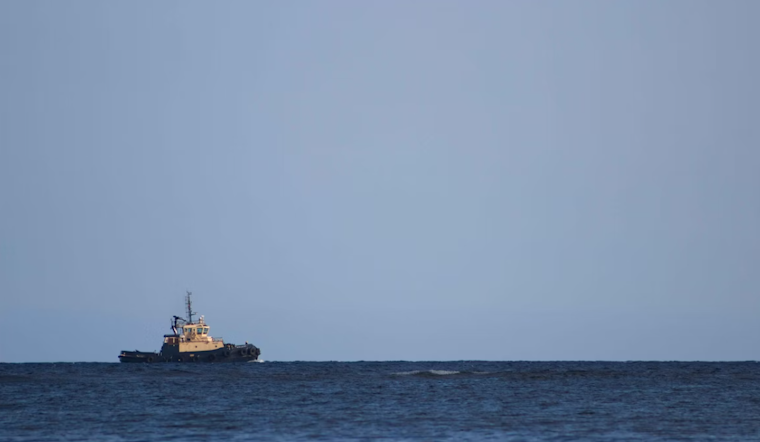
A groundbreaking scientific expedition off West Hawaiʻi has wrapped up a two-week mission that could fundamentally change how we understand water resources on volcanic islands. University of Hawaiʻi at Mānoa researchers, working alongside Scripps Institution of Oceanography, deployed sophisticated electromagnetic imaging equipment to confirm whether a massive freshwater reservoir lies hidden beneath the ocean floor.
The investigation has its roots in a puzzle that has baffled scientists for years—a lot of water appears to be missing from current models. According to Big Island Now, lead researcher Peter Kannberg explains the significance: "If proven, this deep water could explain longstanding mysteries about Hawaiʻi Island's water cycle—namely, why observed coastal discharge doesn't match estimated groundwater recharge."
The University of Hawaiʻi System News reports that the mission focused on waters off the Kona coast, specifically north of Kiholo Bay to Honōkohau Harbor and the coastline south of Kailua Bay to Kealakekua. The expedition was conducted through a contract with the Natural Energy Laboratory of Hawaiʻi Authority (NELHA) and funding from the Hawaiʻi State Legislature.
Revolutionary Technology Beneath the Waves
The team's approach involved deploying instruments on the seafloor to listen for electromagnetic echoes, while a 150-foot-long towed sensor emitted signals recorded on a 3,300-foot-long receiver array. As detailed by Big Island Now, Kannberg describes the traditional model: "The traditional model of freshwater on volcanic islands is you got this bathtub of freshwater underneath the island and that bathtub stops right at the shoreline. What we're finding though is that this freshwater extends offshore beyond where the model would predict."
The theory suggests that rainwater may be funneled underground and trapped beneath layers of volcanic basalt and ash, extending far beneath the basal freshwater lens and even miles offshore. This technology can peer deep into the earth's layers, searching for electrical signatures that distinguish fresh water from salt water.
Implications for Water Management
The potential discovery carries weight far beyond West Hawaiʻi's shores. Don Thomas, a faculty member at the Hawaiʻi Institute of Geophysics and Planetology, frames the stakes in a statement to Big Island Now: "If a significant fraction of freshwater is escaping through these deep aquifers, then we need to re-calculate how much water can can be withdrawn from the nearshore basal lens for human consumption."
This discovery would affect how much water needs to remain in shoreline aquifers to provide nutrients to reefs and the nearshore marine environment. Per the Honolulu Star-Advertiser, Kannberg notes similar findings: "We have done a similar study offshore southern Oahu, where we found significant volumes of freshened water offshore."
Complex Volcanic Geology
What makes these investigations particularly challenging is the unique geology of volcanic islands. The Honolulu Star-Advertiser explains that the volcanic geology increases hydrologic complexity significantly, noting that "water flowing through sand is much simpler to understand and model than water flowing through fractures and lava tubes."
The 2025 expedition had to image much deeper than typical offshore aquifer surveys. Kannberg explains that typically being able to image 1,000 feet below the seafloor is sufficient, but these offshore aquifers extend much further in both breadth and depth than originally thought.
Managing Expectations
Before anyone gets excited about potential new drinking water supplies, researchers are quick to temper expectations. According to the Honolulu Star-Advertiser, these deep aquifers are unlikely to be pure fresh water, and "if they were to be used as a drinking water source, desalination would likely be necessary."
The Natural Energy Laboratory of Hawaiʻi Authority, located at 73-987 Makako Bay Drive in Kailua Kona, served as the contracting agency for this research. NELHA administers the Hawaii Ocean Science and Technology Park, a 870-acre state-subsidized industrial park that has been a hub for ocean-related research since 1974.
Global Implications
The team will now begin processing data from the surveys to determine whether this reservoir exists and understand how much water may be stored in this hidden offshore aquifer. As researcher Amir Haroon from the Hawaiʻi Institute of Geophysics and Planetology told University of Hawaiʻi System News: "We are now applying state-of-the-art technologies to better characterize the complexity of island hydrology—advancing knowledge that could fundamentally improve how we manage and sustain freshwater resources across volcanic islands both here and abroad."
If confirmed, this discovery could represent a paradigm shift in understanding water resources on volcanic islands worldwide, potentially affecting water management strategies from Hawaiʻi to the Galápagos and beyond. The research suggests these offshore aquifers may be "a very prominent feature across all volcanic islands," as mentioned on Big Island Now.





