

























































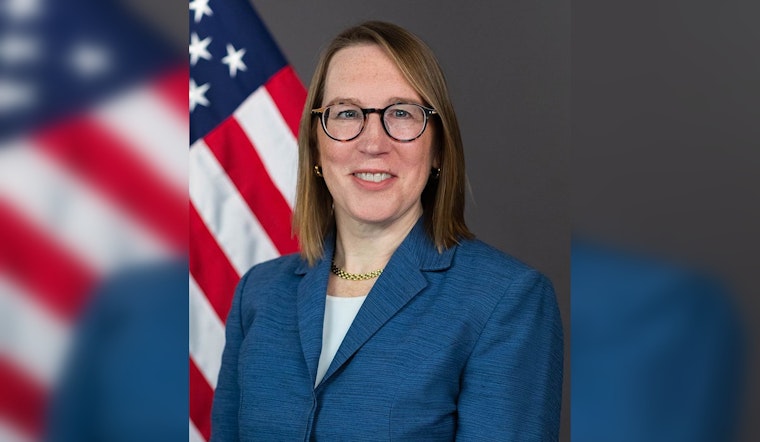
Blockchain technology was at the heart of discussions during the Science of Blockchain Conference where SEC Commissioner Hester Peirce shared her candid thoughts on the current state of financial privacy and the need for a progressive approach that balances regulatory concerns with individual rights. In her speech, she emphasized the importance of protecting personal information in an era where technological advances are reshaping the framework of financial transactions and privacy, as noted by the SEC Newsroom.
To illustrate the transformation brought on by technology, Peirce revisited a personal anecdote involving her grandfather and an old practice of using human telephone operators to connect calls. Just as technology evolved to eliminate these intermediaries and increase privacy, Peirce believes that blockchain and other decentralized tools can now play a similar role in financial transactions. These technologies, she argued, have the potential to "facilitate the disintermediated transmission of value and information" and to ensure that actions traditionally performed by centralized entities can now be accomplished peer-to-peer, without the need for oversight or interference from such institutions. However, she also recognized the fears that come with disintermediation, saying that firms and regulatory agencies sometimes fear these technologies because they "shake up the status quo" and might render current regulatory frameworks obsolete, as detailed by the SEC.
The Commissioner also critiqued the third-party doctrine, a legal concept that's been used to justify the lack of Fourth Amendment protections for information individuals share with others, such as financial institutions. The doctrine assumes that when a person gives information to a third party, they forfeit any expectation of privacy. Commissioner Peirce brought attention to the challenges the doctrine poses, especially in an age where digital technology often requires individuals to share personal information to engage with essential services, thereby inadvertently reducing their privacy.
Moreover, she highlighted the extensive financial surveillance under the Bank Secrecy Act (BSA), which requires financial institutions to file numerous transaction reports. Peirce called for a reassessment of the effective use and cost of such measures, stating that "The benefits generated by financial surveillance may not be worth the jaw dropping costs to financial institutions, their customers, and the government," as noted by the SEC. In her view, the current system places Americans in a kind of financial fishbowl, significantly invading their privacy without enough cause or justification.
As financial privacy becomes increasingly prominent amidst advances in technology, Peirce believes that government must guard jealously the ability of Americans to use [privacy-protecting] tools freely. These tools, which include encrypted networks and cryptographic protocols, potentially offer better protection for Americans' privacy than current laws and should be adopted, she suggested.
Ultimately, Peirce called for a prudent and balanced approach to regulation that safeguards the privacy and dignity of individuals while still ensuring national security and preventing crime. Her perspective, rooted in respect for individual rights and innovation, offered a nuanced take in advocating for a reformation of the financial privacy landscape. Peirce closed her speech with an ode to both financial privacy and a family tradition, inviting the audience to enjoy Watermelon Day with a touch of peanut butter, as a gesture reminiscent of her grandfather's ingenuity.
All information was gathered from her comments made at the blockchain conference, as reported by the SEC.





