

























































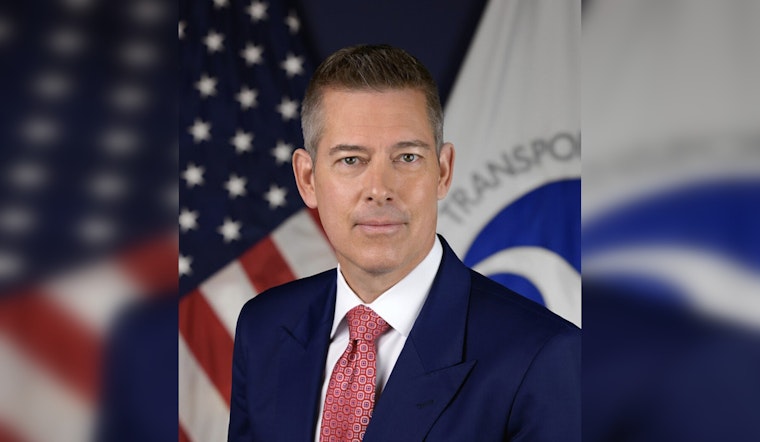
In a decisive move, U.S. Transportation Secretary Sean P. Duffy has issued an ultimatum to California, Washington, and New Mexico, warning that failure to enforce English Language Proficiency (ELP) requirements for commercial vehicle drivers could result in the loss of critical federal funding. This directive is part of the Department of Transportation’s increased efforts to enhance road safety under the Trump administration. States that do not comply within 30 days risk having up to 100% of their Motor Carrier Safety Assistance Program (MCSAP) funds withheld, significantly affecting their transportation budgets.
The mandate reflects Secretary Duffy's statement that "States don’t get to pick and choose which federal safety rules to follow," a remark made in response to a fatal incident in Florida that resulted in three deaths, where an ELP violation may have been a contributing factor, according to a press release. Following this, the Notice of Proposed Determination of Nonconformity was issued, initiating a formal process that could lead to the suspension of millions in MCSAP funding if the states fail to comply with federal ELP standards. An investigation by the Federal Motor Carrier Safety Administration uncovered widespread noncompliance with these federal requirements, including instances where drivers were placed out-of-service due to ELP violations.
Specifically, California conducted nearly 34,000 inspections that identified violations but issued only one ELP violation resulting in a driver being placed out-of-service. At least 23 drivers with documented ELP out-of-service violations in other states were permitted to continue operating within California. Similarly, Washington has adopted ELP regulations, but only four out of over 6,000 violations resulted in action. Drivers cited with ELP violations in other jurisdictions were allowed to continue operating when inspected in Washington.
New Mexico reported that no drivers were placed out-of-service for ELP violations during the audited period, despite multiple drivers previously found non-compliant in other states being allowed to continue operating. This is part of a broader audit of non-domiciled CDL issuance, aimed at improving nationwide safety and promoting consistency within the trucking industry.





