

























































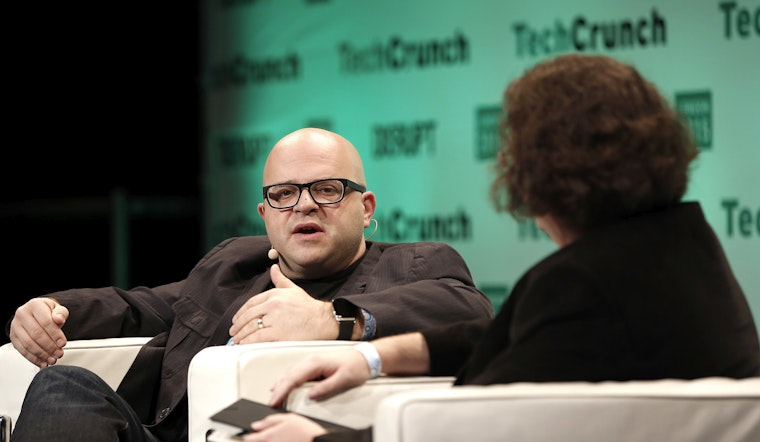
The Bay Area's emergence as a nuclear fusion powerhouse took another major leap forward this week when a trio of heavy-hitters launched Inertia Enterprises, a San Francisco-based startup poised to commercialize the groundbreaking fusion breakthrough achieved at Lawrence Livermore National Laboratory in 2022.
The company represents an unprecedented collaboration between the scientist who designed the world's first successful fusion ignition experiment and the tech entrepreneur who built Twilio into a $4 billion communications empire. Today, it's market cap is nearly $16 billion.
Source: Getty Images
From Lab Breakthrough to Commercial Reality
Andrea "Annie" Kritcher, the Time 100-honored physicist who led the design of Lawrence Livermore's historic December 2022 fusion experiment, is joining forces with Jeff Lawson, Twilio's co-founder who stepped down last year, and Stanford professor Mike Dunne to tackle what they call "the holy grail of energy." The startup has secured nearly 200 patents from the national lab and established what officials describe as the first-ever arrangement allowing a national lab employee to co-found a company in their area of expertise. Kritcher will continue her research role at the Livermore lab while building the startup in a nearby facility.
The collaboration builds directly on the work at the National Ignition Facility, where 192 powerful lasers fired at a capsule the size of a pencil eraser achieved "ignition" – producing more energy than the lasers put into the reaction. Lawrence Livermore National Laboratory officials note that breakthrough "paves the way for advancements in national defense and the future of clean power," though the experiment lasted less than one billionth of a second and barely produced enough energy to warm two pots of coffee.
Bay Area Becomes Fusion Central
The formation of Inertia Enterprises reflects the Bay Area's rapid evolution into the nation's fusion innovation hub, with multiple billion-dollar companies now calling the region home or establishing operations here. The trend gained momentum following the December 2022 breakthrough at the Livermore lab and has attracted massive investment, according to NBC Bay Area, with the fusion industry receiving $7.1 billion in investments globally, about $900 million of which poured in over the past 12 months.
Pacific Fusion, another Bay Area startup founded in 2023, is currently negotiating to build a $1 billion demonstration facility at Alameda Point, where it would join Kairos Power, which is pursuing its own path to affordable nuclear energy. Meanwhile, Focused Energy announced last year it was moving from Austin to the Bay Area to build a $65 million facility, with three of the four scientists from the original Lawrence Livermore breakthrough team now working for the company.
Local Scientific Powerhouse
The concentration of expertise stems from the region's unique scientific infrastructure, anchored by two world-class national laboratories. Professor Mike Dunne brings extensive experience from his role as an Associate Laboratory Director at SLAC National Accelerator Laboratory, where he leads a multi-billion-dollar research facility using high-power lasers. His background includes directing the Laser Fusion Energy program at Lawrence Livermore from 2010-2014, where he assembled teams of over seventy vendors, utility companies, and universities to develop fusion power plant designs.
Kritcher's journey from summer intern to fusion pioneer reflects the lab's deep community roots. Starting at Lawrence Livermore in 2004 as a participant in the Critical Skills Internship Program, she worked her way up to become the lead designer of experiments that achieved what many considered impossible. The American Physical Society Fellow now oversees integrated modeling of fusion designs at the National Ignition Facility, the world's largest laser system housed in a stadium-sized building.
Tech Entrepreneur's New Mission
For Lawson, the pivot from software to fusion represents a dramatic shift from his previous focus. After pressure from activist investors led to his departure from Twilio, the serial entrepreneur known for his "Ask Your Developer" philosophy was looking for his next challenge when he encountered Kritcher's work. The SF Standard reported earlier this year that Lawson has been operating a startup incubator called Founders Garage in the Dogpatch neighborhood, where he's been building cars from scratch while nurturing the next generation of entrepreneurs.
The tech veteran's entry into fusion follows his recent acquisition of satirical newspaper The Onion, demonstrating his willingness to tackle vastly different industries. His experience scaling Twilio from inception to a $4 billion public company provides crucial business acumen for the capital-intensive fusion sector, where Commonwealth Fusion Systems recently raised $863 million and has secured power purchase agreements with Google for future energy supply.
Unique Approach to Commercial Fusion
Unlike competitors pursuing magnetic confinement approaches, Inertia is betting on inertial confinement fusion – the laser-based method proven at Lawrence Livermore. The company plans to develop modern, more efficient lasers that are "far more energetic and far more powerful" than the laboratory's aging systems, while simultaneously working to mass-produce the tiny fuel targets that serve as fusion fuel. According to the company, early design proofs for targets and lasers are expected within 18 months, with scaled production capabilities targeted for three to four years.
The startup aims to have a working fusion plant operational within a decade and a fully scaled facility producing 1.5 gigawatts of power – enough for a medium-sized city – within 12 years. This timeline positions Inertia among the most aggressive commercial fusion developers, though industry experts remain divided on whether such schedules are realistic given the immense technical challenges involved.
Critical Regional Infrastructure
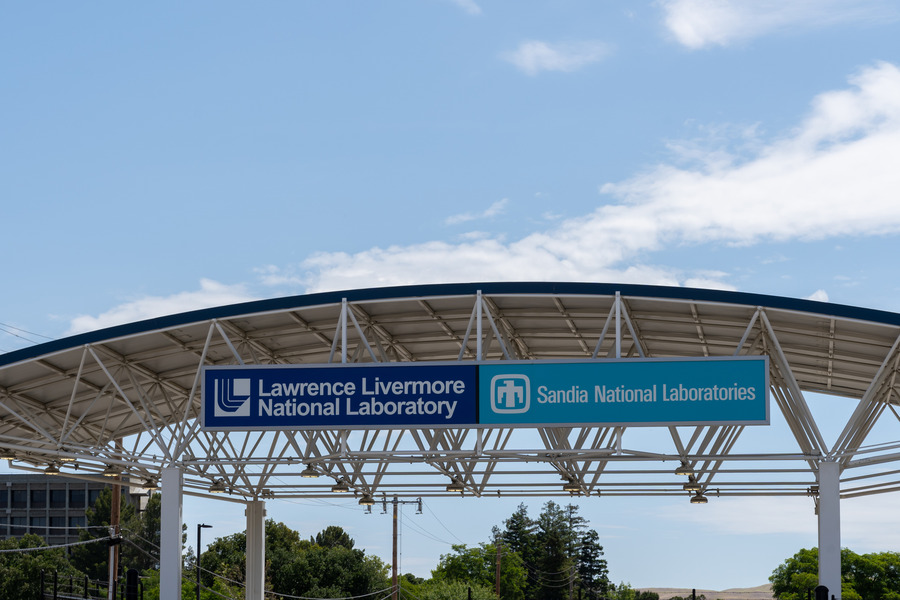
The collaboration leverages the Bay Area's unparalleled fusion research infrastructure, centered around two key facilities that anchor the region's scientific capabilities. The breakthrough work originated at Lawrence Livermore National Laboratory, located in the city's eastern edge and spanning one square mile of federally owned land. The lab's National Ignition Facility houses 192 laser beams in a building the size of a sports stadium, creating conditions that replicate the cores of stars and the interior of nuclear weapons.
Supporting this work is Stanford University's SLAC National Accelerator Laboratory, a 426-acre facility that houses the world's most powerful X-ray laser and employs over 1,700 people. The proximity of these world-class research institutions, combined with the Bay Area's deep talent pool and venture capital ecosystem, has created what industry observers call an ideal environment for fusion commercialization efforts.
Growing Local Competition
The local fusion landscape continues evolving rapidly, with Pacific Fusion's potential Alameda Point development representing another significant regional investment. That company's proposed $1 billion facility would create 250 permanent jobs and advance pulsed magnetic inertial fusion technology, though the project faces uncertainty due to environmental cleanup requirements at the former naval base site.
Local officials and residents have expressed both excitement and caution about the rapid expansion of fusion research in their communities. At recent Alameda planning meetings, residents raised questions about safety protocols and regulatory oversight, while others emphasized the potential for educational partnerships and high-tech job creation. Nuclear physicist and Alameda resident Ron emphasized that fusion presents "no risk of meltdown" and produces "no large volumes of radioactive waste that need disposal," compared to conventional nuclear power.
Broader Economic Implications
The emergence of multiple fusion companies reflects broader trends in clean energy investment and the region's positioning in advanced manufacturing. The formation of Inertia represents the latest example of technology transfer from national laboratories to private industry, enabled by recent federal legislation including the CHIPS Act that encourages such public-private partnerships.
Industry analysts note that successful commercialization could position the Bay Area as the center of a potentially trillion-dollar industry, though significant technological hurdles remain. While Lawrence Livermore's experiments have repeatedly demonstrated fusion ignition, scaling the technology for commercial power generation requires solving challenges around laser efficiency, target manufacturing, and heat capture that have never been attempted at industrial scale.




