

























































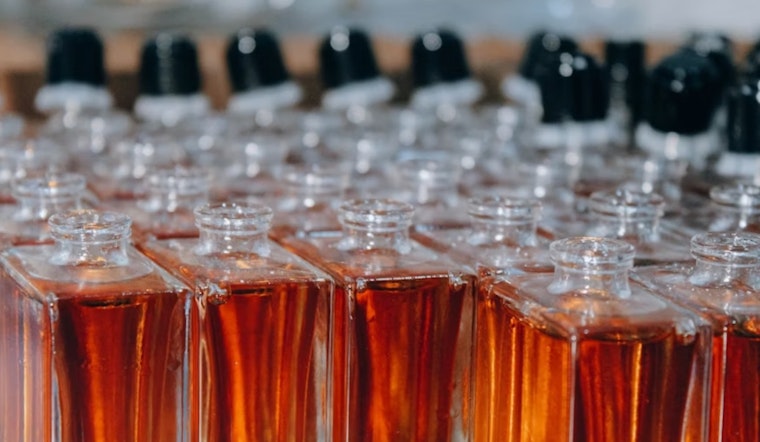
The aroma of daily life is inescapable, from the allure of freshly laundered linens to the signature scent wafting from a favorite hand lotion. Scent's ubiquity begs the question: are we too infatuated with fragrances, and at what cost to our health? The University of Cincinnati's Kelly Dobos, cosmetic chemist and adjunct instructor, dove into these questions recently on WVXU's Cincinnati Edition.
It seems our brains are wired to link fragrance with emotion, "Fragrance is a really important part of our experience in using a product, and certainly fragrance is really associated with our emotional responses because the olfactory bulb in our brain is really connected to our limbic system which is what recognizes emotions and memories," Dobos elucidated during the discussion. The chemical makeup of fragrances consists of over 3,500 compounds typically known as volatile organic compounds (VOCs), which necessitates their evaporation to be detectable by our olfactory system, according to a statement obtained by the University of Cincinnati.
While these VOCs are integral for our enjoyment of fragrances, they come with a catch. Dobos mentioned that for individuals with respiratory conditions, such as asthma, or those with sensitive skin, these chemicals can be irritating or could potentially trigger allergic reactions. Nonetheless, the prevalence of such adverse effects is relatively low, "But those allergic reactions, for example, really only occur in about maybe 2% to 5% of the general population," she told the University of Cincinnati.
The matter of safety is taken into account by fragrance companies, leaning on research for reassurance. Organizations like the International Fragrance Association and Research Institute of Fragrance Materials scrutinize the safety data on chemicals used in fragrances, which includes their effects on respiratory and skin conditions, alongside environmental toxicology. This scrutiny, Dobos assures, is the foundation for the development of safer fragrance.





