

























































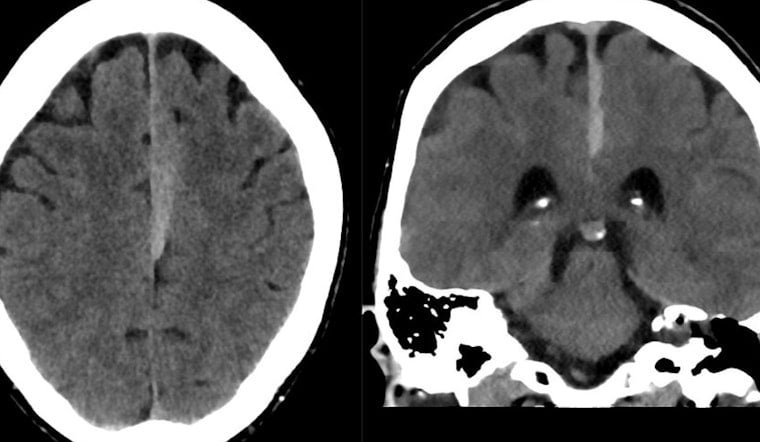
In a significant stride toward understanding and managing subdural hematomas, the University of Cincinnati Gardner Neuroscience Institute has initiated a population-level study to investigate the long-term outcomes of patients with this condition. Dr. David Robinson, leading the groundbreaking research funded by the National Institute of Neurological Disorders and Stroke, is focused on unraveling the implications of blood-thinning medications, which are commonplace among the elderly demographic.
Subdural hematomas, typically resulting from head traumas such as car accidents or, surprisingly, even minor falls where individuals do not strike their heads directly, pose a peculiar risk for patients on anticoagulants. "There are pockets within that population, depending on the exact characteristics, where you can have better or worse outcomes," Dr. Robinson, who is an assistant professor in the Department of Neurology and Rehabilitation Medicine in UC's College of Medicine, told UC News. Moreover, concerns spiral around the balance of risks between recurrent bleeding incidents and adverse events like heart attacks or strokes, which the blood thinners aim to mitigate.
Leveraging the infrastructure established by the Greater Cincinnati Northern Kentucky Stroke Study (GCNKSS), which has been operational since 1993 but has not included subdural hematomas in its remit until now, Dr. Robinson is intent on observing patients for three years post-initial diagnosis. This would allow for a thorough examination of the risk factors and outcomes, potentially redefining the paradigm for managing subdural hematomas in context with blood-thinning treatments.
Advanced machine learning techniques are at the crux of the study, aiming to develop predictive models that could discern who might be susceptible to another subdural hematoma or who is likely to endure cardiovascular mishaps following the initial bleed. "The idea is these advanced machine learning models might help us better assess who really needs to be back on blood thinning medicine as soon as possible and who is at such a risk of bleeding that we probably shouldn’t put them back on a blood thinning medicine," Dr. Robinson elaborated, as per UC News.
This patient-specific inquiry spearheaded by the University of Cincinnati is expected to culminate in tailor-made treatment protocols catering to the nuanced needs of the elderly at risk of subdural hematomas. The initial findings of Dr. Robinson's work are hoped to pave the way for randomized clinical trials, which would aim to substantiate the correct course of blood thinner administration in such delicate cases.



