

























































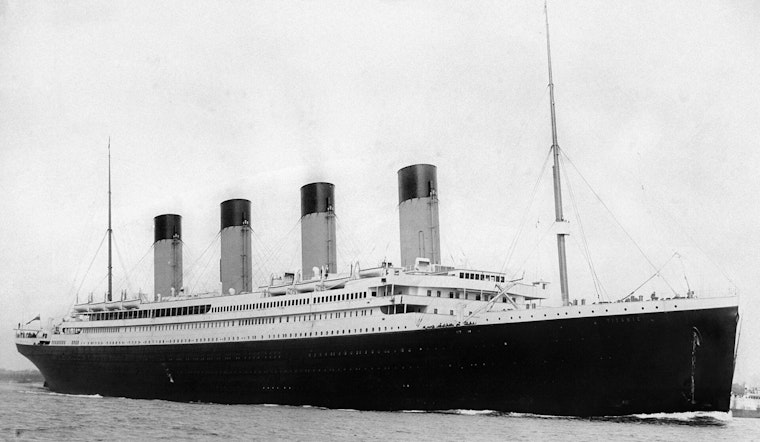
It's been 40 years since the fateful discovery of the RMS Titanic's wreck on the Atlantic seabed by a group of explorers, notably led in part by the Woods Hole Oceanographic Institution. Senior scientist Dana Yoerger, part of the team on that day, got candid about the moment they recognized the colossal liner, "That was super exciting. The first time we 'flew' over the wreck itself. And we could actually see the ship, and it was totally recognizable," Yoerger recalls in a statement to WCVB. The discovery wasn't just a victory for maritime archaeology but also kicked open the door to a broader understanding of ocean tech and science.
Behind the scenes and beneath the press' radar was an intriguing subplot: the Titanic search was a cover for a surreptitious military operation, as uncovered by CNN in conversations with ocean explorer Dr. Robert Ballard. An avant-garde unmanned submersible named Argo, which assisted in the discovery, was initially developed with the U.S. Navy's backing for investigating the fates of two sunken nuclear submarines and other Cold War missions. To the world, the Titanic was an obsession waiting to be found, a relic of arrogance and opulence lying in dark stillness. But to Ballard and his team, it was as much a part of a strategy as it was a scientific quest.
The legacy of that discovery is sizable, stretching far beyond maritime history into the annals of science and technology. Notable efforts following the Titanic find included Ballard's expeditions that provided substantial evidence for plate tectonics and discovered thriving life forms around hydrothermal vents — revelations that challenged and evolved our understanding of life's very sustenance. Despite this, the recognition that rushes in when Dana Yoerger gives his "standard talk" is strongest when that one slide appears; as he told WCVB, "it's the one that everyone reacts to most strongly."
And still, the Titanic's impact on the seas of technology and exploration remain unabated. The echo of its discovery resurfaces in the contemporary work of explorers like Yoerger, now crafting robots to investigate the ocean's twilight zone and Ballard's expeditions aboard the Nautilus, uncovering lost relics of World War II. "I love it when kids tell me to stop discovering things, so there's something left for them to find," Ballard told CNN, a nod to the myriad enigmas that remain tethered to the unfathomable deep. While the proportion of the seafloor mapped stands at 27%, the future seems poised to dive deeper, past the physical remnants of the past and into the abyss of the unknown, where history has yet to be written.




.jpg)